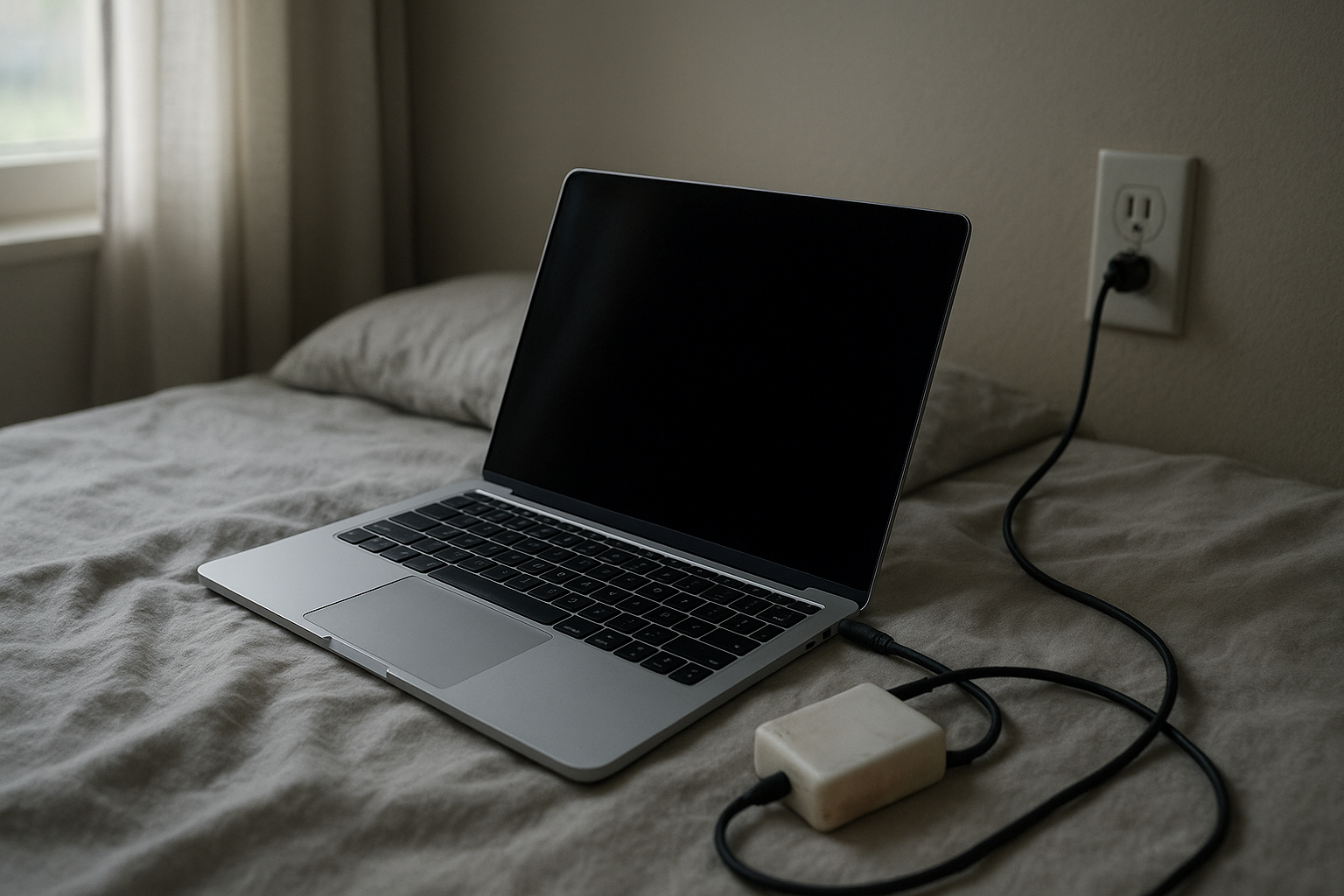
You plug in your laptop, settle in to work or play, and after a while you touch the charger brick almost by accident. It feels hotter than you expected. Not just warm. Hot enough that you pull your hand back and stare at it for a second.
That moment is unsettling because chargers do get warm, so part of you wants to shrug it off. But another part starts doing quick mental math. Is this normal heat? Is this the kind of thing people ignore right before a charger fails? And if you need the laptop right now, the last thing you want is to unplug everything and deal with it.
And once you notice it, it’s hard to ignore.
Why This Situation Feels So Frustrating
The annoying part is that a hot charger usually shows up when you already need your device. You are in the middle of work, in a game, on a video call, finishing a deadline, or just trying to keep your day moving. So now there is this extra layer of stress sitting there beside the laptop, literally generating heat while you try to focus.
You want to keep using it because replacing a charger is not always cheap, and if the problem turns out to be the laptop instead, that feels even worse. At the same time, there is that low-grade fear of making something more expensive by ignoring it. A charger that feels wrong can make every charging session feel like a small gamble.
Something feels off.
That is what makes it so mentally exhausting. You trust the device because it has probably worked fine for months or years, but now you are watching it constantly. You keep touching the charger, checking the battery icon, listening for odd sounds, wondering if the smell in the room is real or if you are imagining it. It turns into background anxiety fast.
What People Usually Notice First
For a lot of people, the first sign is simple: the charger brick feels alarmingly hot during gaming or heavy work. Maybe the laptop fan is already loud, the battery is draining and charging at the same time, and the power adapter suddenly seems to be working overtime. Heat makes sense in that situation, but sometimes it feels like more than it should.
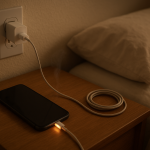
Another common situation is charging on a bed, couch, or blanket without thinking much about it at first. Then later the charger feels overheated and you start wondering whether it was trapped under a pillow or pressed into soft fabric with nowhere for the heat to go. That realization tends to come with immediate regret.
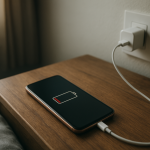
Some people notice the charging becomes inconsistent. The laptop charges, then stops, then starts again. The connection may seem loose, or the battery percentage crawls up more slowly than usual. That makes it harder to tell whether the issue is just heat buildup, a failing charger, or the laptop power port acting up.
And then there is the smell. Even a faint odd odor during charging can flip a normal evening into a stressful one. If you smell something sharp, plasticky, or slightly burnt, it is hard to stay relaxed about it. That kind of sign gets your attention fast, and honestly, it should.
Why It Can Be Confusing
The biggest problem is not knowing where normal ends and too hot begins. Chargers are not supposed to stay cold. They convert power, and that naturally creates some heat. So a little warmth is expected. But there is a big difference between warm enough to notice and hot enough that you do not want to hold it.
It also is not always obvious whether the problem is the charger or the laptop. A charger can run hot because it is aging, damaged, or the wrong wattage. But the laptop can also be the reason, especially if it is under a heavy load, struggling with battery health, or dealing with power draw that keeps surging. That gray area is what leaves people stuck.
Then there is the question nobody wants to get wrong: when do you stop using it? You can read more about why a laptop charger may overheat, but in real life the decision usually comes down to whether the signs feel merely annoying or genuinely unsafe. And that can be hard to judge in the moment.
It’s not completely broken. But it’s not right either.
The Hidden Impact on Daily Use
This kind of issue affects more than the charger itself. It chips away at how reliable your laptop feels. If you cannot trust it to charge normally, every long task gets a little more stressful. You start planning around battery percentage. You avoid moving too far from an outlet. You hesitate before opening heavier apps because you know they might make the charger run even hotter.
That dependence on devices is what makes small warning signs feel bigger than they look. A hot charger is not just a hot charger when your job, schoolwork, messages, files, and downtime all run through the same machine. Suddenly a basic power accessory has the power to derail your concentration for hours.
And it is such a small thing, physically. That is the strange part.
Everyday technology creates this quiet kind of stress where convenience and caution start fighting each other. You want to stay plugged in because you need to get things done. But the longer the charger feels wrong, the more you wonder whether you are making a bad call just to avoid inconvenience.
When It’s Probably Nothing Serious
There are times when charger warmth is fairly normal. If the adapter is in open air on a hard surface, the laptop is doing something demanding, and the charger just feels warm or somewhat hot without any smell, sparking, buzzing, or charging issues, that may simply be part of regular use. Power adapters often get noticeably warm, especially during heavy sessions or when the battery is charging from a low level.
Heat that goes down after the laptop finishes charging or after you stop demanding tasks is also less concerning than heat that keeps climbing no matter what. If the charger works consistently and the cable, plug, and brick all look intact, that is a better sign than a charger that behaves strangely.
Still, normal does not mean invisible. You notice it because your instincts are picking up on a change, and that is reasonable.
When You Should Pay More Attention
If the charger becomes too hot to touch comfortably, smells odd, makes noise, shows discoloration, has frayed cables, or causes the laptop to charge on and off, it deserves more attention. The same goes for adapters that overheat even during light use or when they are sitting on a proper hard surface with decent airflow.
Another warning sign is repeated stress around the same issue. If you keep having to reposition the charger, unplug it to let it cool down, or check it every twenty minutes, that is already telling you something. Even if it has not failed yet, a charger that constantly makes you nervous is not in a healthy place.
Trust that feeling when multiple signs show up together. Heat plus smell is different from heat alone. Heat plus flickering charging is different too.
Simple Ways to Improve the Situation
Sometimes the fix is not dramatic. Giving the charger open space on a hard surface can help more than people expect. Soft furniture traps heat, and crowded floors full of cables do not help either. Keeping the adapter uncovered and away from blankets, cushions, and direct sunlight is just basic common sense, but it matters.
It can also help to notice patterns. Does the charger only get very hot during gaming? Only while fast charging from a nearly dead battery? Only with one outlet or extension cord? Those clues can make the situation feel less random and help you decide whether the charger itself is the likely issue.
If the adapter is old, damaged, off-brand, or clearly under strain, replacing it with a proper compatible charger is often the most sensible move. Not because every warm charger is dangerous, but because power problems tend to get more expensive when they are ignored for too long. A little caution can save a laptop, not just a charger.
Conclusion
A hot laptop charger is not automatically a sign of danger, but it is not something to dismiss blindly either. Some warmth is normal. Alarming heat, odd smells, inconsistent charging, or visible wear are different. That is where paying attention matters.
The hardest part is that this problem lives in the space between normal and unsafe, and that gray area is stressful. You want to keep working. You do not want to overreact. But you also do not want to learn the hard way that the warning signs were real.
If the charger only gets mildly warm under heavier use, it may be fine. If it keeps making you uneasy for good reasons, it is worth taking seriously. Sometimes your first reaction is the right one.
Better a brief interruption than a bigger problem later.