You plug in your phone during a busy afternoon, glance down a little later, and the charger feels hotter than you expected. Not just warm. Hot enough that you pull your hand back and start wondering if you should unplug everything right now. That moment gets your attention fast.
I’ve had this happen with a phone that needed a quick charge before leaving the house, and it puts you in an annoying spot. You need the battery. You also do not want to ignore a warning sign sitting right there in your outlet. And once you notice it, it’s hard to ignore.
Why This Situation Feels So Frustrating
Charging is supposed to be the easy part. You plug in, walk away, come back later, and the device is ready. So when heat enters the picture, the whole routine feels less dependable. Suddenly a simple everyday habit starts to feel like a judgment call.
That is what makes this so frustrating. People want fast charging because they are busy and their phone is basically part of the day now. But fast charging also makes people nervous when the charger brick or the phone starts feeling warmer than usual. You trust these devices because you use them all the time. Then one day something feels off.
There is also the money side of it. Nobody wants to replace a charger, cable, or phone if they do not have to. But nobody wants to save twenty dollars and take a chance on safety either. It’s not completely broken. But it’s not right either.
What People Usually Notice First
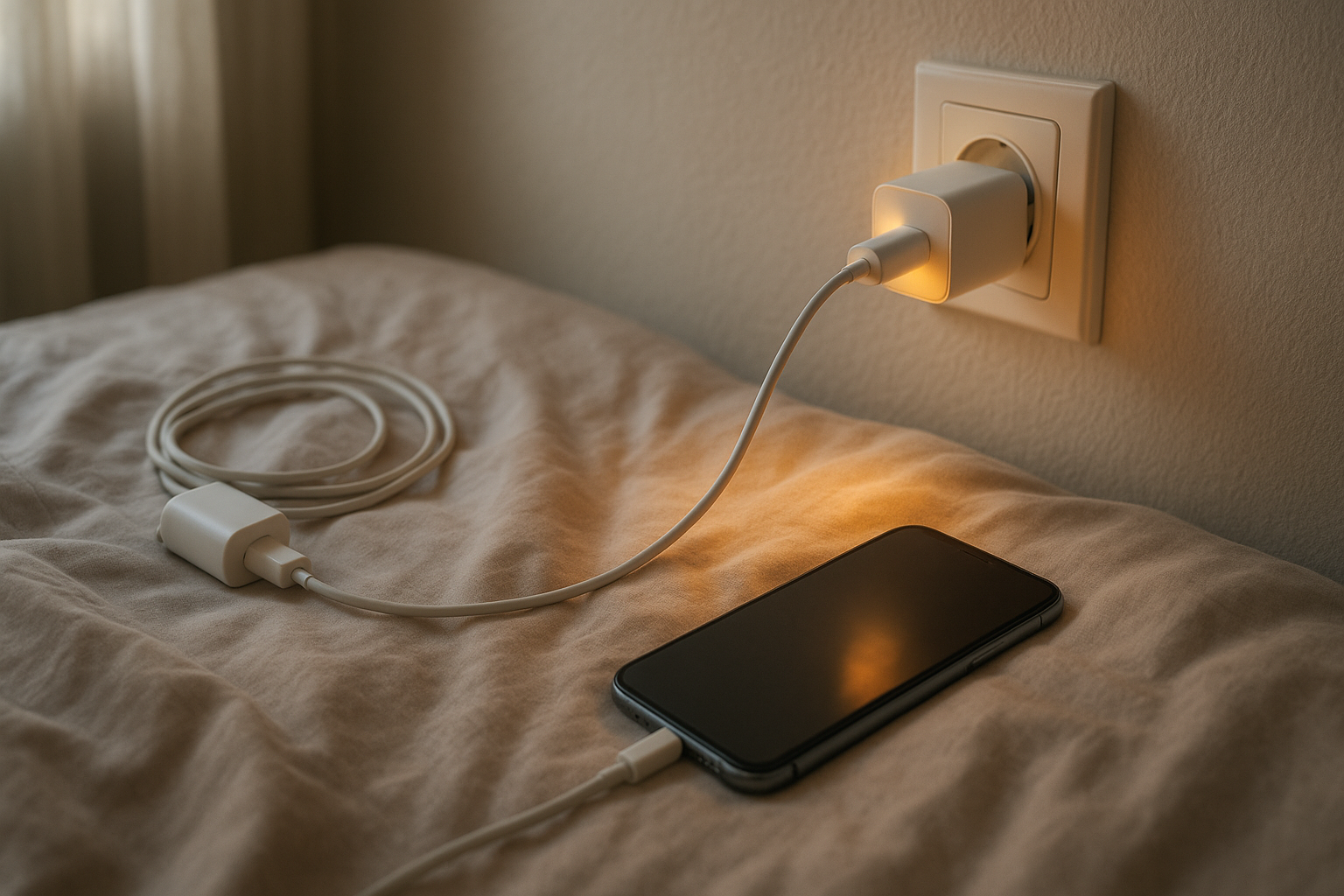
Usually it starts in a very ordinary moment. A phone gets hot during a daytime charge when you are answering messages, checking directions, and trying to keep up with work. Or a charger seems fine at a desk but feels strangely hot after being used on a bed or couch where air is not moving around it well.
Sometimes the first sign is not the charger itself but the cable. It only works if it sits at a certain angle. You nudge it slightly and charging stops. Then it starts again. That kind of thing makes people uneasy, and for good reason. It may still work, but it no longer feels trustworthy.
Another common moment is comparing chargers around the house. You try the one from your tablet, then the spare from a drawer, then maybe the one in the car. You are hoping one of them feels more normal and makes the problem disappear. Sometimes it does. Sometimes it just makes the whole thing more confusing.
Why It Can Be Confusing
The hard part is that chargers do get warm. Phones do get warm. That by itself is not unusual, especially during fast charging or while the device is in use. So people end up stuck in the middle, trying to decide whether what they are feeling is ordinary heat or the kind that means stop using it immediately.
It gets even murkier when you cannot tell what is causing it. Is it the charger brick? The cable? The phone case trapping heat? The battery inside the device? The wall outlet? You can swap one thing and think you found the answer, then the problem shows up again later.
That uncertainty is why people keep searching for a clearer line between warm and dangerous. If you want a grounded explanation of what that heat can mean, this breakdown of a charger getting hot while charging matches what a lot of people are dealing with at home.
And honestly, confusion makes people wait longer than they should. Not because they are careless. Because they are trying to be reasonable.
The Hidden Impact on Daily Use
This kind of issue does more than create a little worry. It chips away at reliability. If you no longer trust the charger by your bed or the cable in your bag, charging stops feeling automatic. You start checking it too often. You charge less confidently. You avoid plugging in and walking away.
That affects work, errands, travel, and all the small in-between moments where you just need your device to be ready. A charger that runs too hot can make you hesitate to top off your phone before heading out, even when you really need that battery percentage. A laptop power adapter that seems too warm can make a work session feel tense for no good reason other than doubt.
Small warning signs carry a weird amount of emotional weight. That is true with tech more than people admit. We depend on these devices constantly, so when something as basic as charging feels uncertain, it creates stress that lingers in the background. Quietly.
When It’s Probably Nothing Serious
A little warmth is usually not a reason to panic. Chargers often run warm during normal use, especially if they are charging a low battery quickly or if the device is being used heavily at the same time. If the charger is warm but still comfortable to touch, and there is no smell, no buzzing, no discoloration, and no charging interruptions, that is often within the range of normal.
The same goes for a phone that feels a bit warm during navigation, video calls, streaming, or gaming while plugged in. It is doing a lot at once. Heat can build up from that combination without meaning anything is seriously wrong.
Context matters here. A charger used in an open, hard-surface area may feel fine, while the same charger on a couch cushion may trap more heat than it should. That difference alone can make a normal charger feel more alarming than it really is.
When You Should Pay More Attention
There are times when the heat does deserve more respect. If the charger feels too hot to hold comfortably, if the cable looks worn or frayed, if charging cuts in and out, or if you notice a burning smell, stop using it. No debate. That is not the moment to hope it fixes itself.
Pay attention too if one charger consistently gets much hotter than another with the same device, or if the cable only works at a certain angle. That can point to wear, damage, or a poor connection. Even if it still charges, it is telling you something.
Also worth noticing: heat that seems to be getting worse over time, a charger that has visible cracks, pins that look damaged, or a device that heats up unusually fast even during light charging. You do not need to diagnose every detail yourself. You just need to take the pattern seriously.
Trust that instinct. Really.
Simple Ways to Improve the Situation
Sometimes the fix is not dramatic. Using the charger on a hard, open surface instead of a blanket, pillow, bed, or couch can make a real difference. So can taking off a thick phone case during charging if the device tends to hold heat.
It also helps to match the charger and cable to the device rather than mixing random accessories that happen to fit. If a cable has become unreliable or loose, replacing it is often a better idea than continuing to babysit it every day. A charger should not need a perfect angle or a little wiggle to behave.
And if one charger makes you uneasy while another does not, that comparison matters. It does not prove everything, but it is useful information. Sometimes simple consistency tells the story better than any technical explanation.
Do not overthink every warm charger. But do not talk yourself out of obvious warning signs either.
Conclusion
The tricky part about charger heat is that both things can be true at once: some warmth is normal, and some heat is a sign to stop. That gray area is exactly why people feel so uncertain around it. You are trying to balance convenience, cost, and safety in the middle of a regular day.
If the charger is only mildly warm and behaves normally, it may be nothing serious. If it is very hot, inconsistent, damaged, or just feels wrong in a way that keeps getting your attention, listen to that. Everyday tech should not make you nervous every time you plug it in.
Sometimes the best clue is not technical at all. It is the moment when a routine task stops feeling routine. That matters.