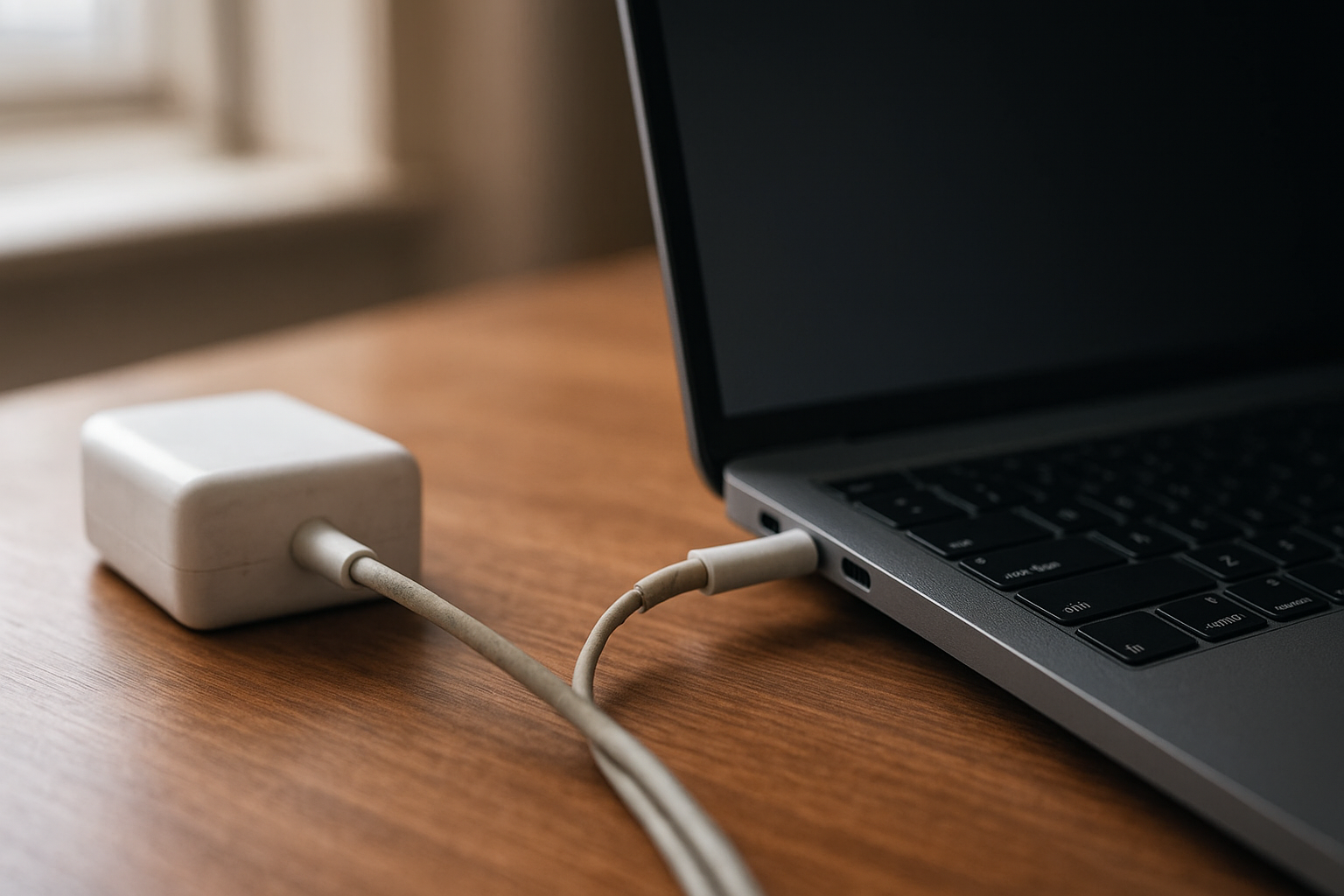
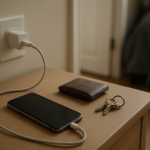
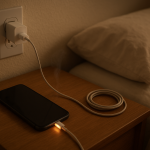
You’re in the middle of something that cannot really wait. Maybe it’s a video call, maybe a deadline, maybe your battery is already under 15 percent and dropping fast. You reach down, touch the laptop charger or cable, and it feels hotter than you expected. Not just warm. Hot enough that you pull your hand back for a second and wonder if this is normal or the start of a bigger problem.
That moment is unsettling in a very specific way. Your laptop still works. The charger still works. Nothing has fully failed. But something feels off.
And once you notice it, it’s hard to ignore.
Why This Situation Feels So Frustrating
The annoying part is that a hot charger creates a decision you did not want to make. You need to keep working, but now you are also thinking about damage, safety, and whether you are pushing your luck. It turns a simple routine into a small argument with yourself.
Part of you wants to say it is probably fine because it worked yesterday, and because replacing chargers, cables, or power adapters is not always cheap. Another part of you starts mentally replaying every warning you have ever heard about overheating electronics. Saving money feels reasonable until the charger starts smelling a little warm or the plug only works at a certain angle. Then the whole thing stops feeling like a bargain.
There is also the fast-charging problem. People buy higher-power cables and adapters because they want their laptop to keep up with real work, not crawl back to life over four hours. But when the setup gets noticeably hot, speed stops feeling convenient and starts feeling risky.
That is the real tension. You want dependable technology. You do not want to babysit your charger while trying to get through the day.
What People Usually Notice First
For a lot of people, the first sign shows up during normal use, not some dramatic failure. You are on a call, your laptop is plugged in, and the charger brick or cable feels hotter than usual sitting beside your desk. Maybe you are gaming, editing video, or doing something heavy while the battery is low and charging at the same time. The machine is already working hard, and the charger seems to be working hard too.
Sometimes it is not just heat. It is heat plus a faint plastic smell that makes you stop and look around the room. Not strong enough to set off panic, but enough to make you wonder whether that smell is coming from the charger, the cable, or your imagination.
Another common sign is when charging becomes fussy. You wiggle the plug to keep the laptop charging, or you notice the cable has to sit just right. That detail matters. A cable that used to click in firmly but now feels loose or inconsistent usually does not inspire confidence, even if it still technically works.
It’s not completely broken. But it’s not right either.
Why It Can Be Confusing
The problem with charger heat is that some warmth is normal. Chargers convert power, laptops pull more energy during demanding tasks, and things can get warm without being dangerous. That is why people second-guess themselves. They do not know whether what they are feeling is ordinary or a warning sign.
It also is not always obvious what part is actually causing the issue. The cable might be damaged, the charger brick might be struggling, the laptop port might be loose, or the laptop itself could be drawing more power than usual. When charging still sort of works, it is easy to blame the wrong thing.
Then there are all the mixed signals from newer accessories. Some cables claim high wattage, fast charging, and broad compatibility, but they can still feel flimsy in daily use. A label may say one thing while your instincts say another. If you want a broader explanation of what can cause this, this breakdown of overheating laptop charging cables covers the common reasons in plain language.
That uncertainty is what keeps people using a setup longer than they should. Not because they feel confident. Because they are not sure what they are seeing.
The Hidden Impact on Daily Use
A charger that gets too hot does more than create a safety worry. It starts quietly affecting how you use your laptop. You begin checking the cable during meetings. You unplug and replug things before starting important work. You avoid charging in your lap or on soft surfaces because you do not trust the setup anymore.
That low-grade stress adds up. It breaks concentration. It makes routine tasks feel less routine. If your work depends on your laptop, a charger problem is not a small side issue. It changes how reliable your whole day feels.
Small warning signs are easy to dismiss at first. A little extra warmth. A tiny bend near the connector. A charger that seems fine unless you move it. But wear builds slowly, and trust breaks the same way. Not all at once. Piece by piece.
That part gets overlooked.
When It’s Probably Nothing Serious
There are times when a warm charger is just a warm charger. If the laptop is doing heavier work, the battery is low, and the charger only feels moderately warm without any smell, flickering, disconnecting, or unusual behavior, that can fall within normal use. The same goes for charging in a warm room where heat lingers more than usual.
Newer compact chargers can also run warmer than older bulky ones, which feels backward until you live with one. Warm is not automatically bad. A little heat during active charging is expected.
The key difference is consistency. If the charger gets warm in understandable situations and cools back down normally, without any burnt smell, visible damage, or charging instability, it may not be a crisis.
When You Should Pay More Attention
If the charger feels very hot during basic use, that deserves attention. If there is a plastic smell, discoloration, fraying, cracking, sparking, buzzing, or intermittent charging, pay even more attention. A cable that only works when bent a certain way is not something to trust for long.
The same goes for adapters, hubs, and docks that seem to complicate charging. Convenience is great until it introduces one more weak point between the wall and your laptop. If the heat problem started after adding an adapter or switching to a different cable, that change matters.
And if your instincts are telling you the setup feels different than it used to, listen to that. Familiar devices develop familiar patterns. When those patterns change, there is usually a reason.
Sometimes replacing the suspect part is cheaper than pretending not to worry.
Simple Ways to Improve the Situation
In a lot of cases, the safest improvement is also the least dramatic one: stop using the charger or cable that makes you uneasy and switch to a known good replacement from a reliable source. Not the mystery spare from a drawer. Something you actually trust.
It also helps to reduce the little stresses that build heat over time. Keeping the charger on a hard surface, avoiding tight bends in the cable, and paying attention to whether a dock or adapter is part of the problem can make the whole setup feel more predictable. If the laptop port is loose or the connection drops easily, that is worth checking too, because no charger works well when the connection itself is unstable.
You do not need to become an expert in power delivery to make a better call. Usually, you are just looking for one thing: does this setup feel normal and dependable, or does it feel like something you are tolerating?
That distinction matters.
Conclusion
A hot laptop charger sits in an awkward gray area because it often works right up until the moment you stop trusting it. That is why people keep using them longer than they should. Work needs to get done. Replacements cost money. And no one wants to overreact to a charger that might only be a little warm.
But if the heat is new, stronger than usual, paired with smell, looseness, or charging glitches, it is reasonable to treat that as a warning instead of an inconvenience. Technology should feel dependable. If your charger now feels like the weak link in your day, that feeling is telling you something.
You do not have to wait for a dramatic failure to decide it is time to stop using it.