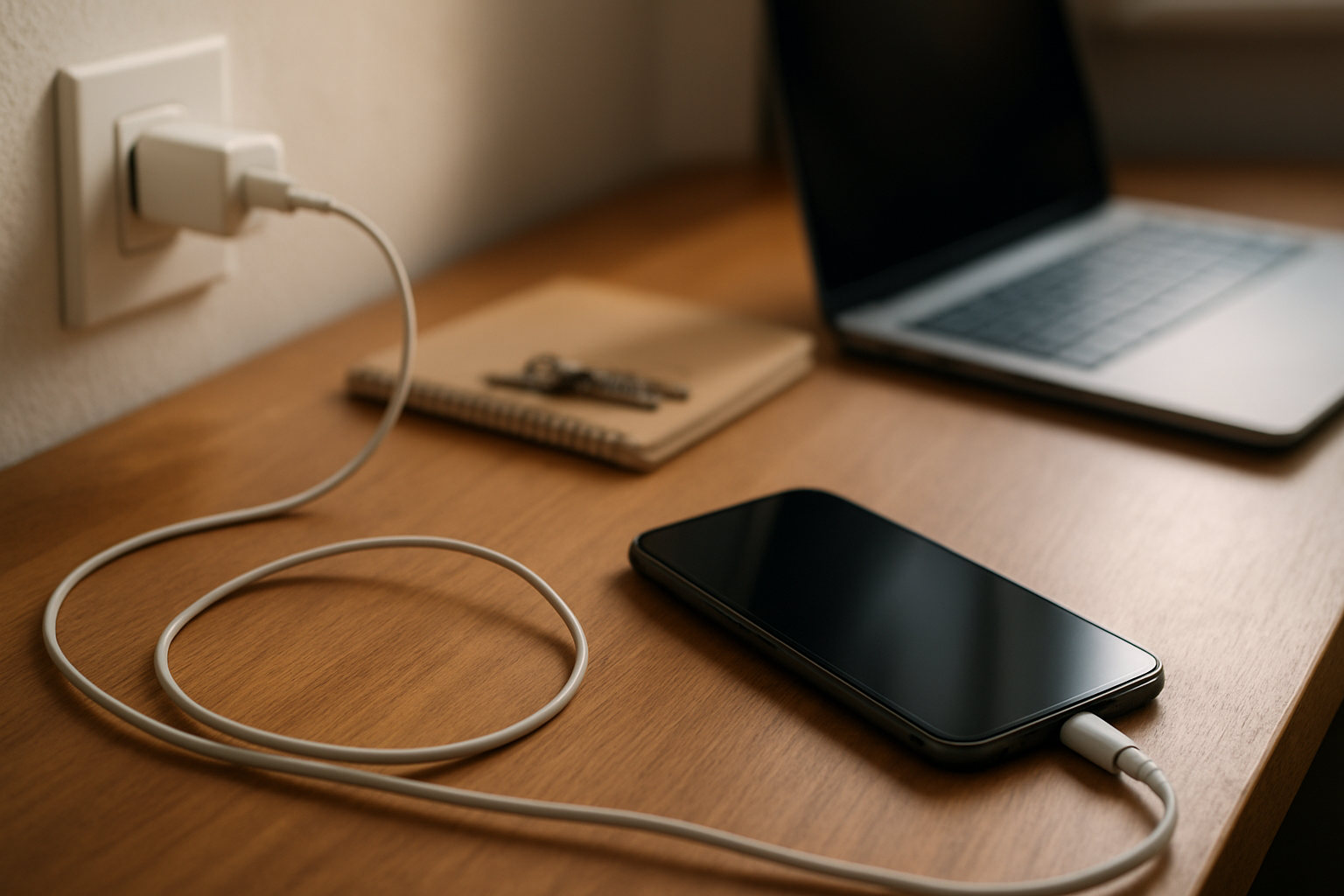
You plug in your phone while getting ready to leave, glance over, and see the charging symbol disappear. Then it comes back. Then it drops again. That tiny on-and-off behavior can ruin the whole mood of a normal morning faster than it should.
I think that is what makes this issue so aggravating. The device is not dead. It is not clearly broken. But it is not acting right either. And once you notice it, it is hard to ignore.
The same thing happens with laptops too. You are trying to finish work, answer one more email, save one more file, and the charging pauses for a second, then resumes. Maybe the battery percentage stays flat. Maybe the screen dims. Maybe the device gets warmer than usual and suddenly your focus is gone.
Something feels off.
Why This Situation Feels So Frustrating
Charging problems hit a nerve because they show up at the worst time. Right before leaving home. In the middle of work. Late at night when you need your phone for the next day. A device that should be quietly helping you get through life suddenly becomes another thing to manage.
That is where the stress starts. You need to stay connected, but the device acts unpredictably. You hope it is just a cable sitting weird in the port, but part of you wonders if the battery is failing or if something inside is getting damaged every time it cuts in and out. You want a quick fix, obviously. Most of us do. But when you are not even sure what to trust, every small change feels like guessing.
It can feel strangely personal too. We depend on these things for directions, messages, work, payments, photos, reminders, all of it. So when charging becomes unreliable, it is not just a hardware annoyance. It chips away at your sense of control.
That part is easy to underestimate.
What People Usually Notice First
Often it starts small. A phone only charges if the cable is held at a certain angle. A laptop keeps making that little sound as power disconnects and reconnects. Maybe you notice the battery icon switching back and forth while you are trying to finish something important.
Sometimes the first sign is heat. The device feels warmer than normal while charging, not always dangerously hot, but warm enough to make you pause and wonder if you should unplug it. Other times it is the interruption itself that stands out. The screen wakes up over and over. The charging message flashes. The battery percentage crawls upward, then seems to stall.
And then there is that annoying moment when you test the cable again just to see if it was a fluke. It works for a minute. Then it does it again.
Not great.
Why It Can Be Confusing
This kind of problem is confusing because there are too many possible causes that look almost identical from the outside. It could be the cable. It could be the charger block. It could be the charging port. It could be the power outlet. It could be the device itself. A worn battery can create one kind of anxiety, but a loose connection can look almost the same in everyday use.
That uncertainty is what keeps people stuck. You do not know if the behavior is normal wear, a temporary glitch, or the start of something more serious. You are also left wondering when to stop using it the usual way and get help. That line is not always obvious.
If you have been dealing with charging that cuts in and out, this breakdown of the issue may help make the situation feel a little less random. Sometimes just seeing the possibilities laid out clearly lowers the panic.
Because panic is part of it. Even if we do not always admit that.
The Hidden Impact on Daily Use
A device does not have to completely fail to start disrupting your life. It just has to become unreliable. That is enough. When charging keeps stopping and resuming, you stop trusting the battery percentage. You start checking more often. You carry a charger from room to room. You avoid leaving the house with less than a certain percentage because you do not trust that you can top it off quickly.
Work gets interrupted in small but draining ways. Concentration breaks. Simple tasks take longer because part of your attention is now on the power situation. That background stress builds up, especially if the issue hangs around for days or weeks.
There is also the mental side of it. A tiny charging glitch can trigger outsized anxiety because it hints at failure. Not total failure yet, maybe. But enough to make you wonder whether your phone or laptop is becoming one more unstable thing in a routine that already depends on technology staying predictable.
That is why this issue feels bigger than it looks.
When It’s Probably Nothing Serious
Sometimes the fix is surprisingly ordinary. A cable gets bent from daily use. Dust collects in a charging port. A charger starts wearing out and becomes inconsistent before it fully fails. A power strip can be loose. Even a slightly awkward connection can cause charging to cut in and out without meaning the whole device is in trouble.
If the problem only happens with one specific cable or adapter, that is often a reassuring sign. If the device charges normally again after switching accessories, cleaning up the setup, or moving to a different outlet, it may be more about the connection than the device itself.
That can still be annoying, of course. But annoying is better than serious.
When You Should Pay More Attention
If the device gets unusually hot, that deserves more caution. If charging has become inconsistent across different cables or chargers, that is harder to dismiss. If the port feels loose, if the battery drains unusually fast, or if the device only charges when held in one exact position, those are signs the problem may not be minor anymore.
You should also pay closer attention if the interruptions are becoming more frequent instead of occasional. The pattern matters. A random hiccup once in a while is one thing. A worsening pattern is another.
And if using it starts to feel risky, trust that feeling. You do not need to be an expert to notice when a device seems unstable in a way that goes beyond normal wear.
That is usually the moment to stop guessing.
Simple Ways to Improve the Situation
The most helpful approach is usually the calm, boring one. Try a known-good cable and charger. Use a stable outlet. Pay attention to whether the issue follows the accessory or stays with the device. Keep the charging area clean and avoid forcing connections that do not sit properly.
It also helps to notice patterns instead of reacting to one weird moment. Does it happen only while the device is being used heavily? Only with one charger? Only in one room? Small observations can make the problem feel less chaotic and can also help if you decide to get support.
If the device is warm, let it rest. If the connection feels delicate, do not keep wiggling it aggressively just to make it work one more time. That temptation is real, especially when you need a quick charge, but pushing a bad connection usually adds more stress than confidence.
Sometimes the best move is simply not pretending it is fine.
Conclusion
A device that keeps stopping and resuming charging can create a surprising amount of tension because it lands right in the gap between working and failing. That gray area is uncomfortable. You still need the device. You still hope it is nothing. But you no longer trust it the same way.
And that is the real problem. Not just the battery percentage or the cable angle, but the way a small power issue can turn an ordinary day into a string of little interruptions and doubts.
If it ends up being just a worn cable, great. If it turns out to need real repair, catching it early is better than waiting until it stops charging altogether. Either way, you are not overreacting for paying attention. When a device feels unreliable at the moment you need it most, that frustration is completely real.
It is not completely broken. But it is not right either.