Introduction
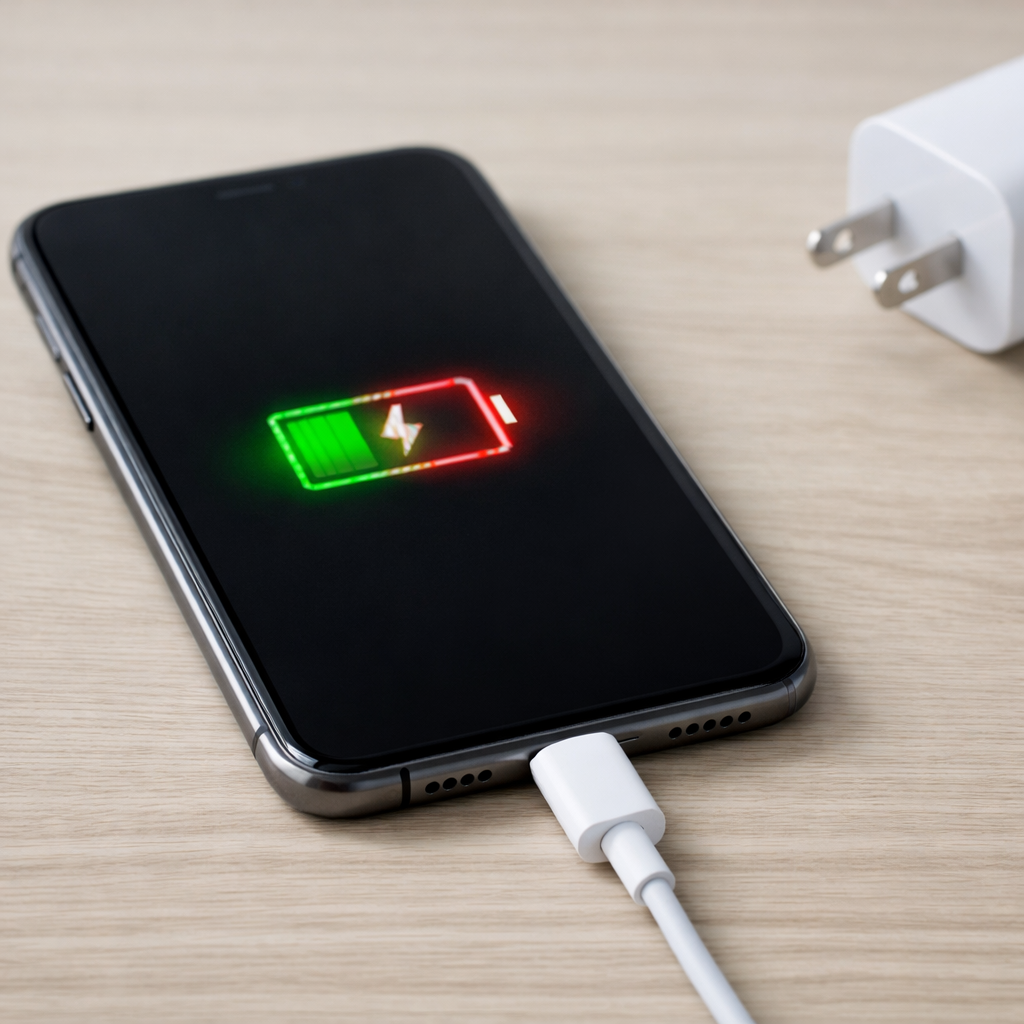
You plug your phone in before bed, see the charging symbol, and assume everything is fine. Then morning comes, and the battery is lower than expected or only halfway full. That little moment can throw off your whole day. Suddenly you are checking the cable, the outlet, the charging brick, and the phone itself, trying to figure out what changed.
I have dealt with this kind of charging issue before, and what makes it so irritating is that it is not always fully broken. The phone charges. Then it stops. Then it starts again. You move the cable slightly and it comes back to life. A few minutes later, it drops out again. It’s not completely broken. But it’s not right either.
And once you notice it, it’s hard to ignore.
Why This Situation Feels So Frustrating
A phone is one of those everyday tools you rely on without thinking much about it, at least until something feels off. When charging becomes unreliable, the phone stops feeling dependable. That is where the stress really starts. You are not just dealing with a minor tech issue. You are dealing with uncertainty.
You want the phone ready when you need it. For work. For school. For directions. For messages from family. When the battery starts behaving unpredictably, it creates a low-level anxiety that follows you around. You start glancing at the battery percentage more often. You start carrying extra cables. You stop trusting the device to make it through the day.
That sounds small until it happens to you.
There is also the question nobody likes: is this normal, or is the phone starting to fail? That unknown can be worse than the problem itself. If the issue comes and goes, it is easy to second-guess what you are seeing. Maybe the phone is protecting itself from heat. Maybe the cable is worn out. Maybe the charging port is damaged. Maybe this is the beginning of an expensive repair.
What People Usually Notice First
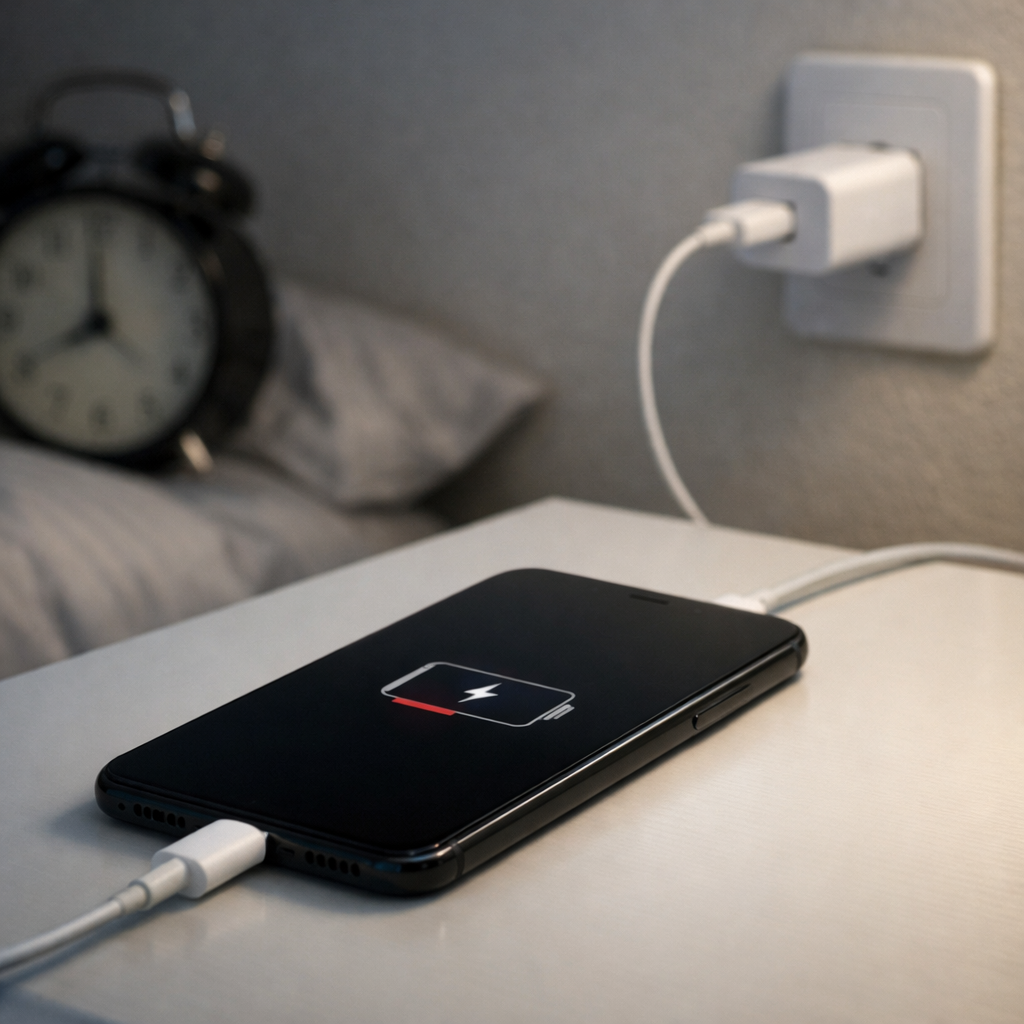
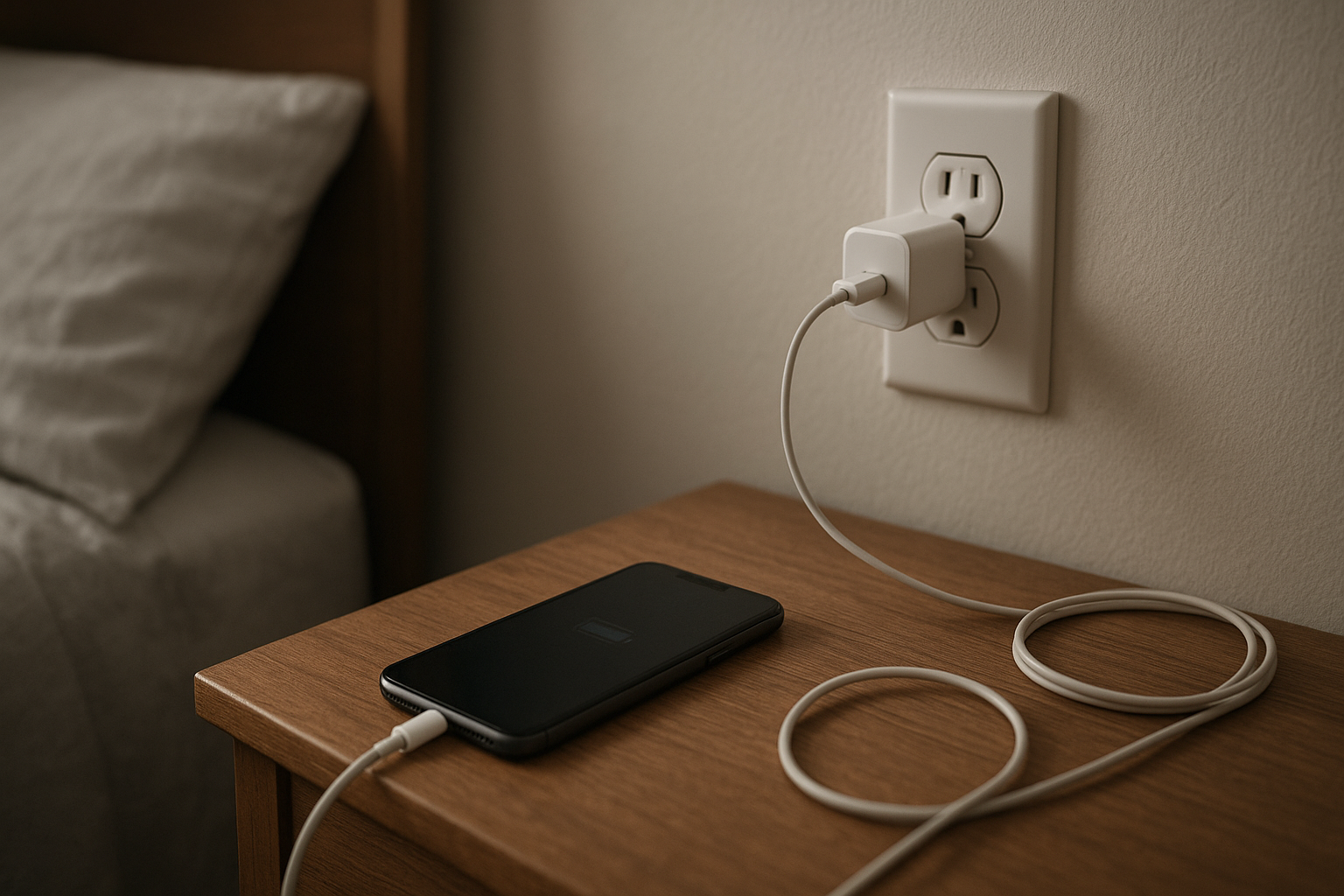
For a lot of people, the first sign shows up overnight. You plug the phone in, set it on the nightstand, and go to sleep expecting a full battery by morning. Then you wake up and see 43 percent, or 68 percent, or some number that tells you charging clearly stopped at some point during the night. It leaves you feeling uneasy before the day has even started.
Other times it happens while traveling, which is somehow even worse. You are in a car, at an airport, or using a portable charger, and the battery percentage keeps moving in the wrong direction. It might go up a few points, then stall, then drop again because the phone is using power faster than it is taking any in. That is the kind of thing that makes you keep unlocking the screen just to check, which only adds to the problem.
Then comes the cable shuffle around the house. You try the one from the bedroom, then the one from the kitchen, then the backup cable you forgot you had in a drawer. Maybe one seems to work better for a while. Maybe none of them feel reliable. At that point, frustration takes over because you are no longer charging a phone. You are troubleshooting your life in tiny, annoying bursts.
Something feels off.
Why It Can Be Confusing
Part of what makes this problem so hard to read is that intermittent charging sits in a weird middle ground. If the phone never charged at all, at least the problem would be obvious. But when it charges sometimes and stops other times, every explanation feels possible.
Sometimes the phone may actually be trying to protect itself. Heat can affect charging behavior, and some devices intentionally slow down or pause charging when temperatures rise. That is a lot less alarming than a failed battery or damaged port. But from the outside, the behavior can look exactly the same.
That is why people go searching for reassurance, trying to figure out whether this kind of stop-and-start charging is common or a sign of trouble. A helpful example of that confusion shows up in this explanation of charging that stops and resumes, because it gets at the real issue: you are not just asking what is happening. You are asking whether you can still trust the phone.
And trust matters more than people admit. A phone that behaves unpredictably creates constant doubt. You never really know if the battery percentage on screen reflects reality or just the last few minutes.
The Hidden Impact on Daily Use
Charging issues do not stay neatly inside the charging issue category. They spill into everything else. If you are heading to work and your phone did not charge properly overnight, you leave home already behind. If you are a student, it can affect how confident you feel about getting through classes, transit, and communication for the day. If you are waiting on a call from family, the uncertainty feels even heavier.
That is the hidden cost of a problem like this. It chips away at reliability. You start making backup plans for a device that is supposed to be the backup plan. You charge more often, worry more often, and keep one eye on the battery level even when you are trying to focus on something else.
It sounds dramatic. But it is real.
Small tech problems have a way of creating outsized stress because they threaten access. Access to people, information, maps, work apps, school portals, bank alerts, ride shares, all of it. When the battery becomes unreliable, connection feels fragile too.
When It’s Probably Nothing Serious
Sometimes this issue comes down to conditions rather than failure. A slightly loose cable, dust in the charging port, a weak power adapter, or a hot room can all cause charging to pause or behave inconsistently. If the phone still charges normally with a different cable or after cooling down, that is usually a sign that the problem may be manageable rather than severe.
The same goes for occasional interruptions that happen only under specific conditions, like using the phone heavily while charging or plugging into a low-power source. In those cases, the phone may not be charging fast enough to keep up, which can make it seem like charging has stopped when it is really just struggling to gain ground.
Annoying, yes. Catastrophic, no.
When You Should Pay More Attention
If the charging cuts in and out no matter which cable or adapter you use, it is worth taking more seriously. The same applies if the port feels loose, the cable no longer sits securely, the phone gets unusually hot during charging, or the battery percentage jumps around in ways that do not make sense. Those are the moments when the issue starts feeling less temporary and more like wear, damage, or battery aging.
You should also pay attention if the phone is becoming unreliable in ways that affect daily use, like shutting down early, refusing to charge past a certain point, or losing power too quickly after unplugging. Even if the phone still works, repeated charging interruptions can be the warning sign that something is wearing out.
That does not always mean a major repair is coming. But it does mean the pattern deserves attention instead of endless guessing.
Simple Ways to Improve the Situation
In a lot of cases, the most helpful thing is to simplify the setup. Use one known-good cable and one reliable charger instead of rotating through random accessories. Keep the charging area cool and avoid placing the phone under blankets or in direct sunlight while it is plugged in. If the port looks dusty or packed with lint, having it cleaned carefully can make a bigger difference than people expect.
It also helps to notice patterns instead of reacting to every single interruption. Does it happen only in the car, only overnight, only when the phone is warm, or only with one specific charger? Those clues matter. They can tell you whether you are dealing with an accessory problem, an environment issue, or something more tied to the phone itself.
Sometimes the fix is simple. Sometimes it is not.
But even a little clarity can lower the stress.
Conclusion
When your phone charging stops and resumes, the problem is not just the battery percentage. It is the doubt that comes with it. You stop trusting the device to be ready when you need it, and that makes a normal day feel more complicated than it should.
If the behavior only shows up once in a while and seems tied to heat, cables, or weak chargers, it may not be anything serious. But if it keeps happening across different setups, or starts affecting how you use the phone every day, it is worth paying closer attention. Not because every charging glitch means disaster, but because dependable power is part of what makes a phone feel usable in the first place.
And when that dependability slips, even a little, you feel it.