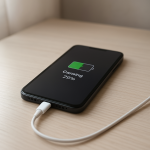
You plug in your phone before heading into a long workday, glance at the little charging icon, and assume you’re fine. An hour later, the battery has barely moved. Maybe it went from 18 percent to 21, which somehow feels worse than not charging at all. It gives you false confidence. Then you leave the house thinking it will make it through the day, and by lunch you’re already hunting for an outlet.
That kind of problem gets under your skin fast. The device is not dead. It still turns on. It still says it’s charging. But something feels off.
And once you notice it, it’s hard to ignore.
Why This Situation Feels So Frustrating
A battery problem is never just a battery problem. It messes with your timing, your routines, and your sense that your device will be there when you need it. Most of us rely on our phones, tablets, or laptops without thinking much about it until they stop behaving normally. Then suddenly every small percentage point matters.
That is what makes this kind of issue feel bigger than it sounds. You want to stay connected, answer messages, get through meetings, use maps, pay for things, and maybe just have enough charge left to call someone on the way home. Instead, you are adjusting brightness, closing apps, and wondering whether touching the cable will make it disconnect again.
There is also that tug-of-war between trying easy fixes and worrying there may be a deeper issue. You swap outlets. You restart the device. You try a different cable. For a minute you feel hopeful. Then it acts up again. Now you are thinking about repair costs, replacement costs, and whether this is the beginning of the end for a device you were not planning to replace yet.
It gets annoying quickly.
And a little stressful too.
What People Usually Notice First
Often it starts in a very ordinary moment. Your phone barely gains charge during a busy workday even though it stayed plugged in most of the afternoon. Or charging only works if the cable is held at a certain angle, which turns a simple task into something weirdly delicate. You tell yourself it is probably just the cord, but then a new cord does not fully solve it either.
Sometimes the timing makes the whole thing more suspicious. The device gets dropped, even lightly, and after that charging feels inconsistent. Other times it starts right after a software update, which is especially frustrating because nothing looks physically wrong. The battery may drain faster, charge slower, or seem to freeze at the same percentage for long stretches.
If the device is older, another question creeps in. Is it worth fixing at all? That is not always easy to answer, especially when the problem is half-visible. The device still works, just not reliably. It’s not completely broken. But it’s not right either.
Why It Can Be Confusing
This is one of those problems that rarely points clearly to one cause. The screen says charging, yet the battery level hardly rises. So is it the battery? The port? The charger brick? The cable? Something in the software? It can feel like guessing, because the signs overlap.
That confusion is part of why people put up with it longer than they should. A charger can look perfectly normal and still become unreliable. A cable can work on one device but act strangely on another. And a battery issue does not always feel like a battery issue at first. It may show up as random shutdowns, slow charging, heat, or the need to plug and unplug repeatedly before anything happens.
If you have been circling the same questions, this battery not charging properly explanation covers the situation in a way that feels more like real troubleshooting than panic. Sometimes just seeing the possible causes laid out calmly helps you think more clearly.
Because that is really the problem. Not just the battery itself, but the uncertainty around it.
The Hidden Impact on Daily Use
When a device becomes unpredictable, it starts changing how you use it. You stop trusting it fully. You carry a charger everywhere. You keep battery saver on by default. You avoid certain apps when you are out. You check the percentage more than you want to admit. It adds friction to the day, even if the issue sounds minor on paper.
That loss of reliability matters. A phone that only kind of charges is not just inconvenient. It can affect work, travel, safety, and simple communication. If your device dies halfway through a call, in the middle of navigation, or before you can pull up a ticket or payment app, the stress feels immediate. Not dramatic. Just constant.
Small warning signs also have a way of becoming trust issues. At first it is a cable that needs to be adjusted. Then it is slower charging. Then it starts losing power while plugged in. Once the routine breaks, you notice every little change. You start wondering what else is about to go wrong.
That part is exhausting.
When It’s Probably Nothing Serious
Not every charging issue means the battery is failing or that an expensive repair is around the corner. Sometimes the explanation is pretty ordinary. Dust in the charging port, a worn-out cable, a weak power adapter, or heavy phone use while charging can all make the battery seem like it is barely moving. The same goes for background activity after an update, when the device may be doing extra work for a while.
If the problem comes and goes, if another charger improves things, or if the device still holds a charge reasonably well once it gets there, that usually suggests something less severe than a full battery failure. Annoying, yes. But not automatically serious.
That is the good news.
When You Should Pay More Attention
If the battery drains unusually fast every day, the device gets very warm when charging, shuts off at random percentages, or only charges in one exact position no matter what cable you use, it is worth taking more seriously. The same goes for a battery that seems to stall at low numbers or a charging port that feels loose or damaged.
A recent drop matters too, even if the screen looks fine. Internal parts can shift just enough to create charging trouble without making the problem obvious. And if an older device is acting worse week after week, that slow decline may be telling you something. Familiar habits stop working because something actually changed.
This is usually the point where people start weighing repair against replacement. That can be frustrating, especially if you were trying to save money. But waiting too long with a worsening charging issue can make a manageable problem more disruptive than it needs to be.
Simple Ways to Improve the Situation
In a lot of cases, the most helpful approach is to stop chasing random fixes and go back to the basics. Use a charging cable and adapter you trust. Check whether the port looks blocked or worn. Notice whether charging improves when the device is resting instead of being heavily used. Pay attention to patterns instead of reacting to one bad charging session.
It also helps to separate temporary weirdness from a repeating issue. One strange day after an update is different from a device that has become unreliable all week. If the problem has a pattern, that tells you more than the battery icon ever will.
And if the device is older, be honest about what you need from it. If you depend on it all day, every day, reliability may matter more than squeezing out a few extra months. On the other hand, if the issue turns out to be a charger or cable, you may be able to solve it without spending much at all.
You do not always need a dramatic fix. Sometimes you just need a clear answer.
Conclusion
A battery that says it is charging while barely making progress creates a very specific kind of frustration. It leaves you half-reassured and half-worried. The device still works, so you keep trying to work around it. But the trust is already slipping.
That is really what makes this hard. Not just power loss, but confidence loss. When something you rely on every day stops behaving normally, even in small ways, it starts to affect more than the battery percentage on the screen.
If your device has been acting strange lately, pay attention to the pattern, not just the symbol that says charging. Sometimes the problem is simple. Sometimes it is the first sign that the device needs real attention. Either way, ignoring it rarely makes it less stressful.
You feel it every time you plug it in and hope for the best.