Laptop Charger Gets Very Hot — Overload, Ventilation, or Failure Risk?
Quick Answer
A laptop charger usually gets very hot because it is being asked to deliver high power for a long time (high current draw), or because parts inside the charger have aged and now waste more energy as heat. Heavy charging plus running the laptop (gaming, video calls, compiling, external monitors) forces the adapter to work near its limit.
Warm is normal, but “very hot” typically shows up within 10–30 minutes of demanding use. If it keeps getting hotter over time, smells odd, or feels hotter than it used to under the same workload, treat it as a potential overload or internal degradation issue.
If you need a fast fix
- Unplug the charger from the laptop and wall for 5–10 minutes, then plug it back in to a different wall outlet (not a power strip) and place it on a hard, open surface.
- Reduce load right now: close heavy apps, lower screen brightness, and disconnect power-hungry USB devices so the charger is not running at maximum output.
- Check the cable ends for looseness or discoloration; if the plug is wiggly, the adapter is buzzing, or you smell burning plastic, stop using it and switch to a known-good charger.
Quick Diagnosis Table
| Symptom | Most likely cause |
|---|---|
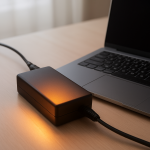
| Charger brick is too hot to comfortably hold, especially during heavy use | Sustained high current draw (laptop workload + charging) pushing the adapter near its rated wattage |
| Charger used to run cooler, but now gets hotter with the same tasks | Internal component aging (capacitors/thermal paste/transformer losses) increasing heat output |
| Heat is concentrated at the DC plug or USB-C tip, not the whole brick | Poor contact, worn connector, or arcing from a loose fit increasing resistance and heat |
| Charger is hottest when the battery is very low (0–20%) | Normal higher charging current at low battery, but can be exaggerated by a weak battery or high system load |
| Hot charger plus random disconnects, flickering charge light, or “plugged in, not charging” | Overload protection triggering, failing adapter, damaged cable, or overheating at the connector |
Why This Happens
Your charger converts wall power into the lower voltage your laptop needs. No conversion is perfectly efficient, so some energy always becomes heat, and the heat rises as the charger delivers more watts.
When you game, render video, or run on an external display while also charging, the laptop can demand close to (or more than) what the adapter is designed to provide. The charger then runs at high output for long stretches, and that steady current draw makes the internal components heat-soak.
Over time, components inside the charger can degrade, which makes the same workload create more heat than it used to. That extra heat can then cause even more inefficiency, so the charger gets hot faster and stays hot longer.
Most Common Causes (Ranked)
- 1) Sustained high power demand (near max wattage): Running the laptop hard while charging keeps the adapter at high output and high temperature for hours.
- 2) Charger aging or internal wear: Older adapters can lose efficiency, making them run hotter even at the same wattage, especially after years of daily use.
- 3) Poor ventilation or heat trapping: A charger on carpet, a bed, under papers, or inside a bag cannot shed heat well, so temperatures climb quickly.
- 4) Loose or dirty connector increasing resistance: A worn DC barrel or USB-C tip can create a high-resistance point that heats up at the plug and may cause intermittent charging.
- 5) Battery health issues increasing charging stress: A failing or overheating battery can cause the system to manage power inefficiently, keeping charge current high or cycling it abnormally.
- 6) Wrong or under-rated charger: Using a lower-watt adapter than the laptop requires forces the charger to run at its limit and can cause excessive heat and throttling.
If the charger runs noticeably cooler after reducing workload or improving airflow, that usually indicates the problem was load- or ventilation-related rather than an imminent failure.
How to Check the Problem Safely
- Check 1: Confirm the charger’s wattage rating matches your laptop’s requirement (look for W on the adapter label and compare to your laptop’s recommended adapter).
- Check 2: Do a controlled test: charge with the laptop asleep or powered off for 20–30 minutes on a hard surface and see if the charger stays much cooler.
- Check 3: Feel where the heat is strongest: whole brick hot suggests high overall load or aging; plug-end hot suggests connector/cable resistance.
- Check 4: Inspect the cable and strain reliefs for kinks, fraying, shiny melted spots, or a “soft” area that feels thinner or lumpy.
- Check 5: If you have a compatible spare charger of equal or higher wattage, test it briefly under the same workload to see if heat behavior changes.
Safety note: do not open the charger brick, and do not keep using any adapter that smells like burning, makes crackling sounds, or causes the plug to discolor.
How to Fix It
- Fix 1 (easiest): Improve airflow: place the charger on a desk or tile, not fabric, and keep it uncovered so it can shed heat more efficiently.
- Fix 2: Reduce peak load while charging: use “Balanced” or “Battery saver” mode, cap game FPS, and unplug unused USB devices so the adapter does not sit at maximum output.
- Fix 3: Reseat and clean connections: unplug, then firmly reconnect the DC/USB-C plug; gently remove lint from the laptop port with a dry, non-metal tool to improve contact and reduce plug heating.
- Fix 4: Use the correct, higher-quality charger: switch to an OEM or certified replacement with the proper wattage (or higher if supported) to avoid constant near-limit operation.
- Fix 5 (advanced/last resort): Address battery or system power issues: run the laptop’s battery health report/diagnostic and consider battery replacement if it is swollen, rapidly overheating, or failing to hold charge because it can keep charging behavior abnormal.
Signs of Battery or Hardware Damage
- Burning smell, sharp chemical odor, or visible smoke from the adapter, cable, or laptop port
- Charger crackling, buzzing that is new or getting louder, or frequent clicking as power cycles
- Charge plug or USB-C tip is too hot to touch, shows browning, or the port looks darkened
- Battery swelling (trackpad or bottom case bulging) or the laptop no longer sits flat
- Random shutdowns under load, sudden drops in battery percentage, or battery overheats quickly
- Charging only works at certain cable angles, or the connection feels loose and intermittent
- Repeated “power surge”/“charger not supported” warnings or the adapter is not recognized reliably
When Repair Is No Longer Worth It
If the charger is overheating due to internal degradation, replacement is usually the better choice because chargers are sealed, safety-critical devices. A new, correct-wattage adapter is typically cheaper than diagnosing intermittent failures, and it reduces fire risk from overheating components.
As a rule, replace the charger if you see plug discoloration, smell burning, experience repeated disconnects, or the adapter is several years old and now runs much hotter than before. If the laptop also shows port damage or battery swelling, budget for professional service, because continuing to charge can worsen the damage.
How to Prevent This Problem in the Future
- Use the correct wattage adapter (or manufacturer-approved equivalent) so it is not constantly running at 90–100% output.
- Keep the charger in open air on hard surfaces, and never charge while the brick is under blankets, pillows, or inside a closed bag.
- Avoid tight cable bends near the brick and connector; stress there increases resistance and heat over time.
- During heavy tasks, consider reducing performance mode or charging when the workload is lighter to lower sustained current draw.
- Keep ports clean and ensure a snug connection; a loose connection can heat up even when the brick itself is fine.
- Replace damaged cables early; intermittent charging often precedes overheating at the plug.
- If your laptop supports it, enable battery care features (charge limit to 80–90%) to reduce long, high-power charging sessions.
FAQ
Is it normal for a laptop charger to get hot?
Yes, warm to hot is common because the charger converts power and loses some energy as heat. It will run hotter when charging a low battery while the laptop is doing demanding work. It should not become so hot that it hurts to touch, smell burnt, or cause charging to cut in and out.
Why is the charger hottest at the plug or USB-C tip?
Heat at the tip usually points to a poor connection or higher resistance at that spot, often from wear, dirt, or a slightly loose port. High current through a resistive connection creates localized heating. Stop using it if you see discoloration or the plug becomes painfully hot.
Will using a higher-watt charger make it cooler?
Often, yes, if the laptop supports it and the charger is a proper compatible model. A higher-watt adapter can deliver the same power while running further from its limit, which can reduce heat. Avoid unbranded or incorrect chargers, since poor regulation can create instability and additional heat.
For a full overview of this issue and step-by-step solutions, read the complete troubleshooting guide.
If the issue keeps coming back, it’s usually worth looking at broader battery behavior rather than a single fix. That’s the approach Mark Reynolds follows in the complete battery guide.