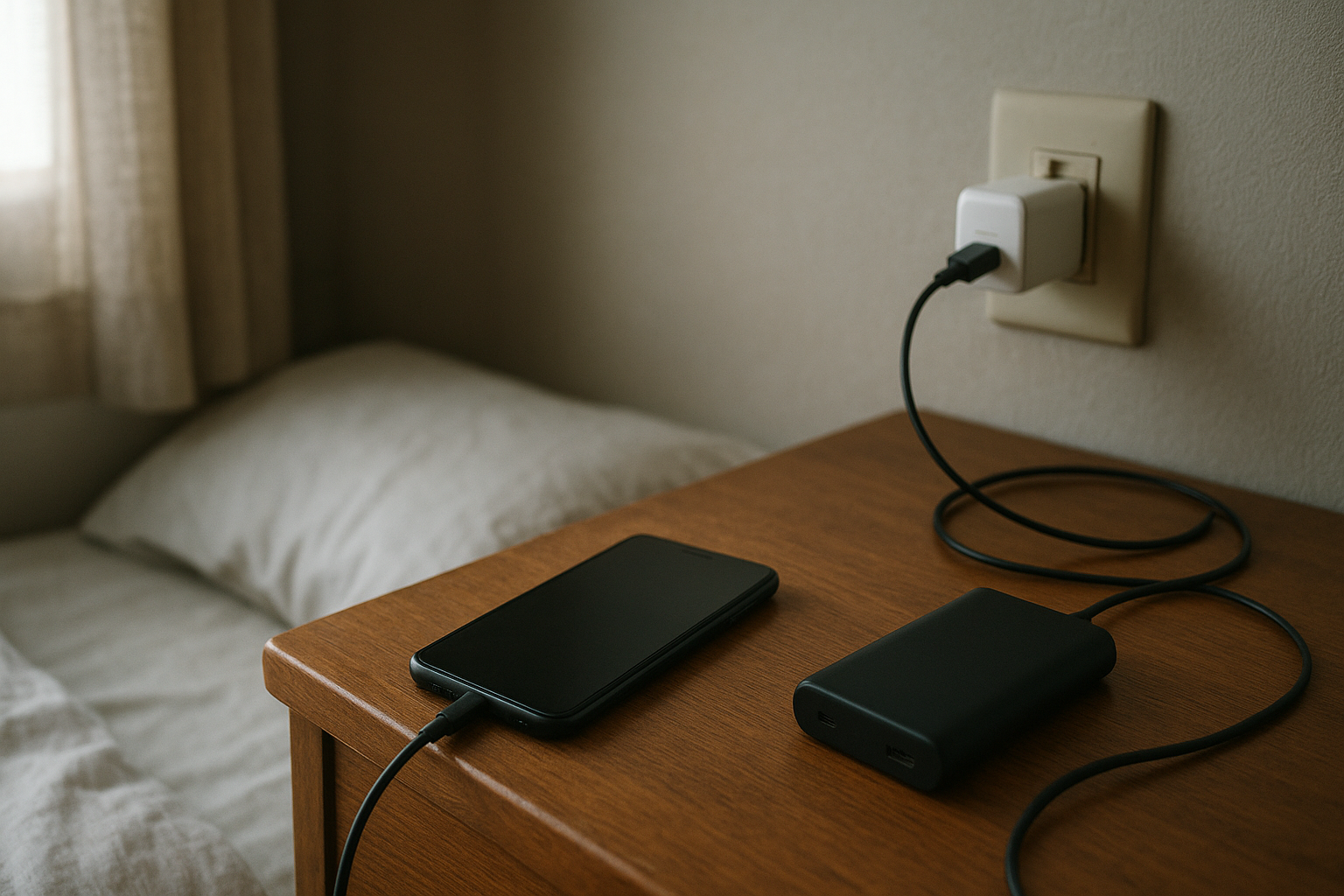
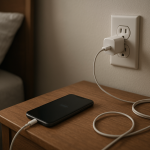
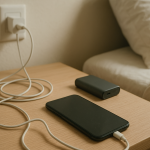
You plug in your phone while getting ready to leave, see the charging symbol, and feel that small wave of relief. Good. It’s charging. Then you check it again ten minutes later and somehow the battery percentage has barely moved, or worse, it stopped entirely. That kind of problem gets under your skin fast because it tricks you into thinking everything is fine right before letting you down.
I think that is what makes this issue so irritating. It is not a phone that is obviously dead. It is not a charger that never works. It starts normally, which makes you trust it for just long enough to mess up your plans.
Something feels off.
Why This Situation Feels So Frustrating
A phone that charges on and off creates a strange kind of stress. You still depend on it for messages, directions, work alerts, school updates, payment apps, and family calls, but now every time the battery gets low, there is a little tension in the background. Can I count on this thing or not?
That uncertainty wears on you. You try quick fixes because you need the phone now, not later. You switch cables, tilt the connector a little, move the phone to a cooler spot, restart it, and hope one of those simple moves is enough. Sometimes one of them seems to help, which almost makes it worse, because then you still do not know what to trust.
And once you notice it, it’s hard to ignore.
There is also the money question hanging over everything. Maybe it is just lint in the port or a worn-out cable. Maybe the battery is aging. Maybe the charging port is damaged and this is going to be one more annoying expense you did not plan for. So you end up stuck between optimism and dread.
What People Usually Notice First
For a lot of people, the first sign shows up at the worst possible time. You plug in your phone before leaving home, thinking you have enough time for a quick boost, and later realize it never held the connection. Now you are walking out the door at 18 percent, already planning your day around battery anxiety.
Other times it happens during work or school. The phone has enough charge to get through the morning, then suddenly drops faster than expected or shuts off at a percentage that should have been safe. That can make a normal day feel much more fragile than it should.
Night charging is another one. You put your phone on charge, go to sleep, and expect to wake up to 100 percent. Instead, it is sitting at 42 percent like it spent the night pretending. That kind of surprise is especially frustrating because you did what you were supposed to do.
Travel and emergencies make the whole thing more serious. If your phone acts up while you are away from home, trying to find an address, waiting for a ride, or needing to call someone quickly, the problem stops feeling like a minor nuisance. It starts feeling personal.
That’s when it gets real.
Why It Can Be Confusing
The confusing part is that the phone usually does charge sometimes. It begins charging, maybe even jumps a few percent, so your first thought is that nothing major is wrong. Then it disconnects, pauses, or loses power faster than expected, and you are left wondering if you imagined the problem.
It also tends to come and go. One day the charger works fine at your desk but fails by the bed. Another cable seems better for a while, then suddenly that one starts acting unreliable too. Mixed results make it hard to tell whether the issue is the cable, the adapter, the charging port, the battery, heat, or just bad luck.
If you have been trying to figure out why a phone starts charging and then stops, you already know how slippery this problem can feel. It is not dramatic enough to clearly diagnose on the spot, but it is disruptive enough to keep throwing your day off.
It’s not completely broken. But it’s not right either.
The Hidden Impact on Daily Use
This kind of issue affects more than battery percentage. It chips away at reliability, and that matters more than people realize. A phone is one of those everyday tools that quietly holds together a lot of modern life. When it becomes unreliable, even in a small way, everything around it gets a little more stressful.
You start checking the battery more often. You carry chargers from room to room. You avoid using maps, videos, or calls unless necessary. You make decisions based on power level instead of convenience. That is a subtle but real drain on productivity and focus.
There is an emotional side to it too. Small interruptions become bigger than they should because they keep happening. A charge that cuts out once is annoying. A charge that cuts out every few days becomes this low-level source of doubt that follows you around. You never fully relax when the battery is below a certain number.
That sounds dramatic until you live with it for a while.
When It’s Probably Nothing Serious
Sometimes the cause is surprisingly ordinary. A worn cable, a loose connection, dust in the charging port, or heat buildup can all create stop-and-start charging behavior without meaning the phone itself is in serious trouble. If the problem mostly happens with one charger, in one location, or after the phone gets warm, that is at least a sign that the issue may be manageable.
An older battery can also behave inconsistently without meaning the whole device is about to fail. Phones age gradually, and charging often becomes less predictable before anything completely stops working. It is frustrating, but not always catastrophic.
In other words, not every charging problem is a disaster.
When You Should Pay More Attention
If the phone regularly stops charging no matter which cable or adapter you use, it deserves a closer look. The same goes for battery drops that feel sudden, random shutoffs, excessive heat, or a charging port that feels loose every time you connect a cable. When the pattern becomes frequent, the phone is telling you something, even if it is not saying it very clearly.
You should also pay attention if the issue starts affecting important parts of your day. Missing alarms, leaving home without enough charge, losing access during work, or worrying about whether the phone will last through a commute are signs that the problem has moved beyond mild inconvenience.
That is usually the point where guessing stops being helpful.
Simple Ways to Improve the Situation
The safest approach is usually the simplest one. Use a charging cable and adapter you trust, avoid charging in places where the phone gets too warm, and make sure the charging port is clean and unobstructed. If a certain outlet or power source gives odd results, do not keep forcing the issue just because it worked once.
It also helps to notice patterns rather than chasing every random failure. If the phone stops charging mostly at night, during heavy use, or after it gets hot in a bag or car, that context matters. Paying attention to when it happens can be more useful than trying ten different fixes in a panic.
If the device is older, it may simply be reaching the point where battery health is affecting normal use. That does not always mean replacing the whole phone right away, but it may mean being honest that the problem is no longer temporary.
Conclusion
A phone that starts charging and then suddenly stops creates a specific kind of frustration because it keeps raising and lowering your confidence. For a moment, you think the problem is gone. Then it is back. That cycle is exhausting.
Most of the time, the real issue is not just the battery or cable. It is the feeling that one of your most important everyday tools can no longer be counted on when you need it most. And that feeling adds up quickly.
If this has been happening to you, you are not overreacting. A small power problem can become a big daily hassle. Sometimes it really is minor. Sometimes it points to wear that is not going away. Either way, it is worth paying attention to, because reliability matters more than people think until it starts slipping.