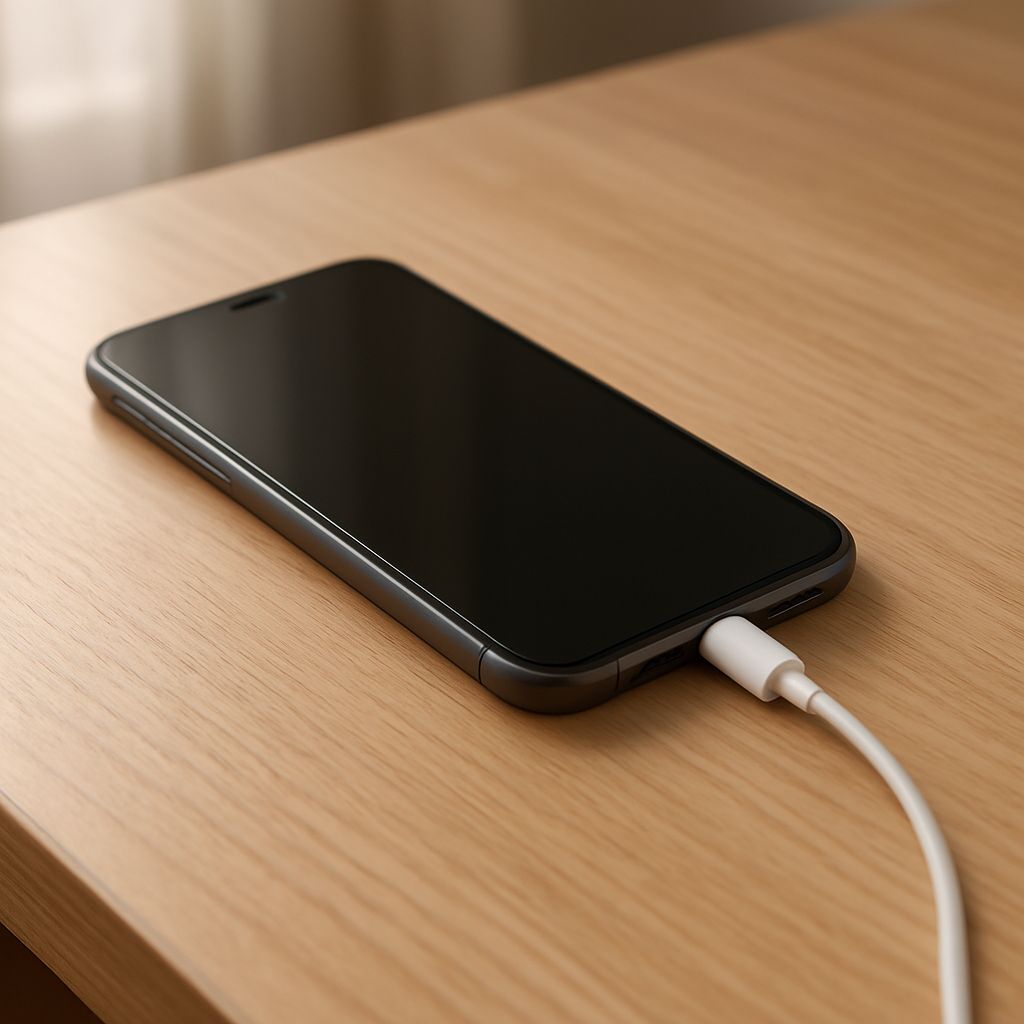
Phone Not Charging Properly — Charging System Failure or Battery Wear?
Quick Answer
Most “slow charging” or “charging stuck” problems come down to one of two things: the battery has worn out and can’t accept energy efficiently anymore, or the phone’s charging system (port, cable path, or onboard charging circuit) is degrading and can’t deliver steady power.
Battery wear usually shows up gradually after 18–36 months of daily use, while charging-system issues can appear suddenly after lint buildup, a drop, liquid exposure, or repeated strain on the cable.
If you need a fast fix
- Try a different known-good cable and wall charger (not a computer USB port), then charge for 20 minutes with the screen off.
- Gently clean the charging port with a dry wooden toothpick or soft brush to remove pocket lint, then reconnect firmly.
- Restart the phone and disable high-drain features (hotspot, navigation, gaming) while it’s plugged in.
Quick Diagnosis Table
| Symptom | Most likely cause |
|---|---|
| Charging icon appears, but battery percentage barely increases | Battery wear limiting energy intake, or charging circuit throttling due to heat |
| Charges only at a certain angle / disconnects with small movement | Worn/dirty port pins or a damaged cable connector (intermittent contact) |
| Fast charging stopped working, but normal charging still works | Cable/charger not supporting the required standard, or port/circuit can’t negotiate fast charge |
| Phone gets hot while charging and slows down | Battery aging or charging circuit thermal protection reducing power |
| Battery jumps from, for example, 30% to 10% or shuts off early | Heavily worn battery with unstable voltage under load |
Why This Happens
Your phone’s battery is a consumable part. Over time, it develops higher internal resistance, so it accepts energy less efficiently and heats up more while charging. When that happens, the phone may intentionally slow charging to protect the battery and internal components.
At the same time, the charging path can degrade. The port’s tiny contact points can wear, loosen, or get coated with lint and grime, and cables can develop internal breaks that still “kind of” work. Even if the screen shows a charging symbol, a weak connection can limit the actual power getting in.
In practice, a worn battery or a struggling charging circuit leads to the same symptom: the phone can’t take in enough stable power, so the percentage rises very slowly, stalls, or drops unexpectedly.
Most Common Causes (Ranked)
- 1) Battery wear (high cycle count): As the battery ages, it charges slower and may heat up more, causing the phone to reduce charging speed for safety.
- 2) Dirty or loose charging port: Pocket lint packs tightly in the port and prevents the plug from fully seating, which reduces power delivery and causes disconnects.
- 3) Cable or charger degradation: A damaged cable can still show “charging” but only deliver a trickle, especially under fast-charging loads.
- 4) Charging circuit or power-management wear: The phone’s charging control components can weaken over time or after heat/liquid stress, limiting current intake even with good accessories.
- 5) Heat and throttling during charging: Charging in a hot car, under a pillow, or while gaming can trigger protective limits that make charging feel “broken.”
- 6) Software or settings interfering: Battery protection modes, optimized charging, or a buggy update can reduce charge rate or pause charging at certain percentages.
If charging becomes steadily more normal after cleaning the port or switching accessories, that gradual improvement usually points to a connection or power-source issue rather than a sudden battery failure.
How to Check the Problem Safely
- Check 1: Test with a different cable and a different wall charger that you know charges another device reliably.
- Check 2: Inspect the port with a flashlight. If you see lint or debris, remove it gently with a dry toothpick or soft brush.
- Check 3: Try charging from a wall outlet, not a laptop/TV/extension USB port, and avoid wireless charging during diagnosis.
- Check 4: Check for heat: unplug after 5–10 minutes if the phone becomes unusually hot, then test again after it cools down.
- Check 5: Look at battery health (if your phone provides it). If maximum capacity is low or the device reports “service,” battery wear is likely.
Safety note: never scrape the port with metal tools, and never use liquids or compressed air aggressively, since you can damage pins or push debris deeper.
How to Fix It
- Fix 1 (easiest): Replace the cable first, then the charger. This solves a large share of “charging but not really charging” cases because cables fail internally without obvious damage.
- Fix 2: Clean and reseat the connection. Removing compacted lint lets the plug click fully into the port, restoring stable contact and normal charging speed.
- Fix 3: Reduce heat and background load while charging. Use airplane mode or low power mode and keep the phone uncovered; cooler temperatures allow the phone to accept more power.
- Fix 4: Check charging-related settings and updates. Disable overly strict battery protection temporarily (if appropriate) and install system updates that may fix charging control bugs.
- Fix 5 (advanced/last resort): Get the battery and charging port tested by a reputable repair shop. If the battery health is poor, a battery replacement usually restores charge rate; if the port or charging circuit is at fault, replacing the port assembly is often cheaper than board-level repair.
Signs of Battery or Hardware Damage
- Battery percentage drops quickly or jumps around (for example, 45% to 20% in minutes).
- Phone shuts off even though it shows charge remaining.
- Noticeable swelling, screen lifting, or the back cover bulging.
- Burning smell, crackling sounds, or discoloration near the port.
- Charging causes excessive heat consistently, even when not using the phone.
- Charging only works when the cable is held in place or angled.
- Severe slow charging across multiple known-good cables and chargers.
When Repair Is No Longer Worth It
If the phone is older, has a weak battery, and also has port or charging-circuit issues, repairs can stack up quickly. A single battery replacement is often worth it, but a combination of battery plus charging-board or motherboard work usually signals diminishing returns.
As a rule, if repair costs approach 40–60% of the price of a comparable replacement phone (especially if the device also has a cracked screen or storage issues), it’s financially smarter to replace. If the phone is still supported with updates and otherwise in good shape, a battery and/or port repair can extend its life by another 1–2 years.
How to Prevent This Problem in the Future
- Use a quality cable and charger that match your phone’s charging standard, and replace cables at the first sign of looseness or fraying.
- Avoid bending the cable at the connector and don’t use the phone as a “handle” while it’s plugged in.
- Keep the port clean by occasionally checking for lint, especially if you carry the phone in a pocket or bag.
- Limit heat during charging: don’t charge under pillows, in direct sun, or while running heavy games.
- Try to avoid living at 0% or 100% all the time; moderate daily charging helps reduce battery wear.
- If your phone has optimized charging or a battery health mode, use it to reduce long-term stress.
- Use wireless charging only when convenient, not as the default, since extra heat can accelerate battery aging on some devices.
FAQ
Why does my phone say “charging” but the battery still goes down?
The phone may be receiving some power, but not enough to cover what it’s using at the same time. A worn battery, heat-based throttling, a weak cable/charger, or a poor port connection can all limit incoming power. Lowering screen brightness and pausing heavy apps while testing can confirm whether it’s an input limit.
Does fast charging damage the battery and cause slow charging later?
Fast charging is designed to be safe, but heat is the enemy of battery life. If fast charging regularly makes your phone hot, the battery can wear faster over time, and the phone may later slow charging to protect the aging battery. Using a slower charger occasionally and keeping the phone cool can help long-term health.
How can I tell if it’s the battery or the charging port?
If charging is inconsistent, works only at certain angles, or fixes itself after cleaning the port, the port or cable is the likely culprit. If charging is consistent but very slow, the phone gets hot, and the battery drains fast even after a full charge, battery wear is more likely. Testing with multiple known-good cables and chargers is the quickest way to separate the two.
For a full overview of this issue and step-by-step solutions, read the complete troubleshooting guide.
Mark Reynolds focuses on everyday battery and charging problems, helping users understand what’s normal and what isn’t. For a full overview, check the battery troubleshooting guide.