Phone Charging Behavior Inconsistent — Unstable Power or Software Control Issue?
Quick Answer
Inconsistent charging (speed jumping up and down, stopping and starting, or showing “charging” but not gaining battery) is most often caused by unstable power delivery from the adapter/cable or the phone’s software regulating power to protect the battery.
This usually means the phone is repeatedly renegotiating charging power or throttling it due to heat, battery level, or background load. It can happen intermittently for days, but if it becomes frequent across multiple chargers within a week, it’s time to troubleshoot more carefully.
If you need a fast fix
- Use a different known-good wall adapter and cable (preferably the original or a certified high-quality set), and charge from a wall outlet instead of a laptop or power strip.
- Clean the charging port gently (power off first) and firmly reseat the cable; if the plug feels loose or wobbly, stop forcing it.
- Let the phone cool down, remove the case, and enable Airplane Mode for 15–30 minutes while charging to reduce heat and background power draw.
Quick Diagnosis Table
| Symptom | Most likely cause |
|---|---|
| Charging turns on/off when the cable is bumped | Loose/dirty port, worn cable connector, or damaged cable causing brief power dropouts |
| Fast charging appears briefly, then falls to “slow” charging | Adapter/cable can’t sustain the required power, or the phone throttles due to heat/battery protection |
| Charging is inconsistent only with one adapter or one outlet | Unstable adapter, failing USB port, or poor wall outlet/power strip connection |
| Battery percent stalls or drops while plugged in | High background usage, hot device, or software-managed charging limits; sometimes weak power source |
| Charging is fine when powered off, but inconsistent when on | Software load, app activity, or OS power management limiting input to control temperature |
Why This Happens
Your phone does not “just take power.” It constantly measures voltage, current, temperature, and battery condition, then decides how much power to accept. If the adapter or cable can’t keep the voltage steady, the phone reduces charging or restarts the charging handshake.
Real-world example: a cheap or aging adapter might advertise “fast charge,” but as the phone asks for more power, the adapter sags and the phone backs off. Another example is charging in a warm room with a thick case; the phone heats up and deliberately slows charging to protect the battery.
When power delivery fluctuates or the phone’s software limits charging, the symptom is the same: charging speed changes, the icon flickers, or the battery percentage barely moves even though it says “charging.”
Most Common Causes (Ranked)
- 1) Unstable or underpowered adapter: Many adapters can’t hold steady output under load, especially older, off-brand, or physically worn units, causing repeated slowdowns or reconnects.
- 2) Cable quality or connector wear: A cable can pass basic charging but fail at higher currents; worn connectors also cause tiny disconnects that look like “random” charging behavior.
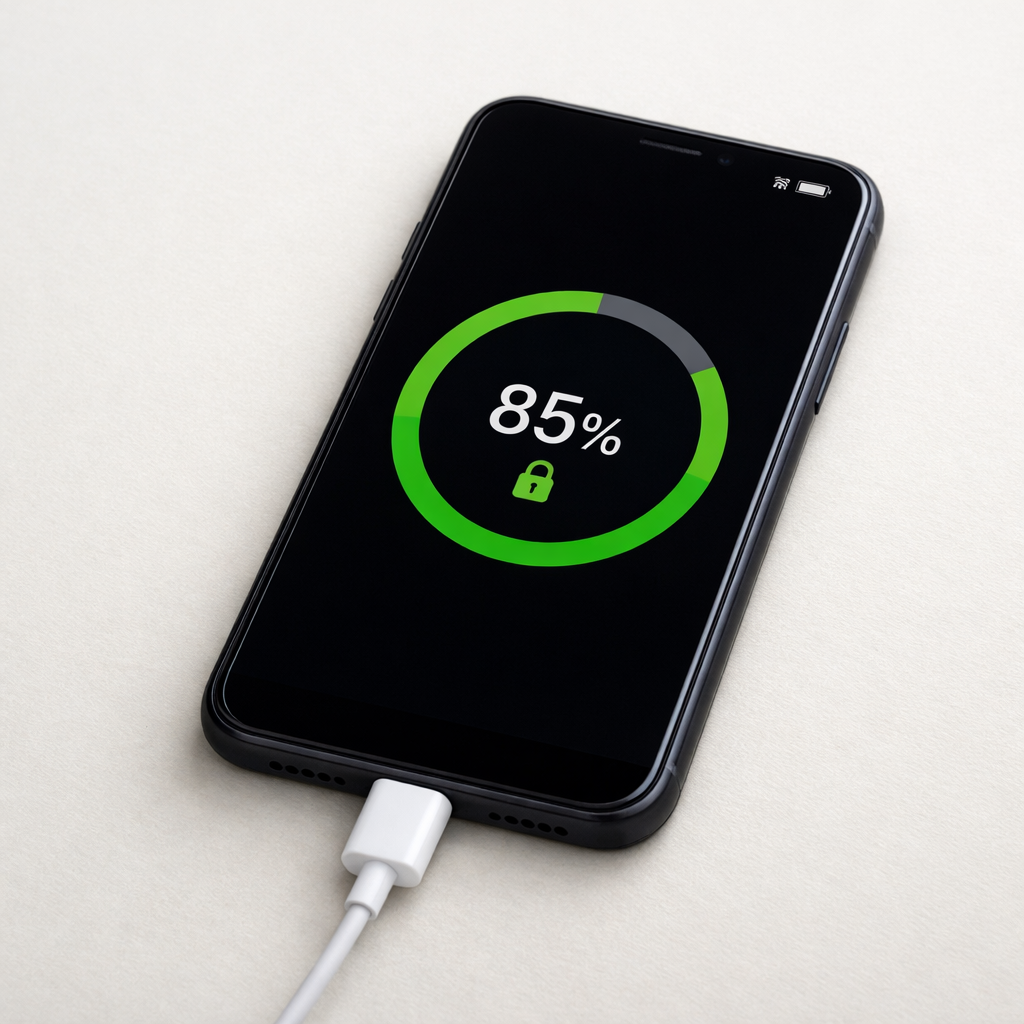
- 3) Software charging regulation (heat, battery protection, optimized charging): Phones intentionally reduce charging speed when hot, near full, or when “optimized” features predict you won’t need full power yet.
- 4) Dirty, loose, or damaged charging port: Pocket lint or oxidation increases resistance, which reduces available power and can trigger stop-start charging.
- 5) Power source issues (outlet, power strip, car USB): Loose outlets and low-quality car chargers often provide unstable power, especially when other devices share the circuit.
- 6) Fast-charge compatibility mismatch: Some fast-charge standards require specific adapter/cable support; mismatches lead to repeated renegotiation and inconsistent speed.
If the phone charges more steadily after changing the adapter/cable and keeping it cooler, that gradual improvement usually indicates the battery is fine and the issue was power stability or regulation.
How to Check the Problem Safely
- Check 1: Try a different wall outlet and plug the adapter directly into the wall (avoid power strips temporarily) to rule out a loose connection or overloaded strip.
- Check 2: Swap one item at a time: first the cable, then the adapter, then the outlet. A single change that fixes it points to the culprit.
- Check 3: Inspect the cable ends and adapter for heat, discoloration, or a burnt smell, and stop using anything that gets unusually hot.
- Check 4: Check the phone’s port with a light; if you see lint, power off and gently remove debris with a wooden toothpick (no metal tools), then try charging again.
- Check 5: Test charging while the phone is idle: close heavy apps, turn on Airplane Mode, and remove the case to see if regulation from heat/load is the trigger.
Safety note: if you notice sparking, crackling, bulging, or a strong burning odor, unplug immediately and do not continue testing.
How to Fix It
- Fix 1 (easiest): Use a known-good adapter and cable from a reputable brand; stable power output prevents repeated disconnects and power renegotiation.
- Fix 2: Charge from a wall outlet, not a laptop USB port or cheap car charger; wall adapters usually provide steadier current and better fast-charge behavior.
- Fix 3: Reduce heat while charging: remove the case, keep the phone out of sunlight, and avoid gaming/video calls; cooler temperatures let the phone accept power consistently.
- Fix 4: Check and adjust software features: disable “optimized/battery-protect charging” temporarily, update the OS, and reboot; this can clear a stuck charging state or overly aggressive throttling.
- Fix 5 (advanced/last resort): If the port is loose or charging only works at certain angles, have the charging port inspected and replaced; physical port wear cannot be fixed with settings.
Signs of Battery or Hardware Damage
- Battery percentage jumps suddenly (for example, 35% to 50%) or drops quickly without heavy use.
- Phone gets hot near the battery area during light tasks or while charging, even with a good charger.
- Charging only works when the cable is held in place or angled a certain way.
- Visible swelling, a lifting screen, or the back cover separating.
- Random shutdowns at 10–30% battery, especially in cold weather.
- Repeated “moisture detected” or “accessory not supported” warnings with multiple known-good cables.
- Burning smell, discoloration near the port, or the adapter/cable becomes excessively hot.
When Repair Is No Longer Worth It
If inconsistent charging is caused by a worn port, repair is often worthwhile on newer phones because a port replacement is typically far cheaper than replacing the device. If the battery is swollen or the phone overheats, prioritize safety and consider replacement if repair costs approach the phone’s resale value.
A practical rule: if repair costs exceed 30–50% of what it would cost to replace your phone with a comparable model (or if the phone has multiple issues like weak battery plus a failing port), replacement usually gives better long-term value.
How to Prevent This Problem in the Future
- Use a high-quality adapter with the correct wattage and fast-charge standard for your phone, and avoid no-name “fast chargers.”
- Replace cables at the first signs of looseness, fraying, or intermittent charging instead of bending them into “working” positions.
- Keep the charging port clean by avoiding pocket lint buildup and not charging in dusty environments when possible.
- Avoid charging while the phone is very hot (car dashboard, under a pillow) to reduce thermal throttling and battery wear.
- Plug and unplug by holding the connector head, not yanking the cable, to minimize port and connector wear.
- When possible, charge on a stable wall outlet rather than shared power strips that can loosen or brown out.
- Install OS updates, since charging control and thermal management are frequently improved in firmware updates.
FAQ
Why does my phone say “charging” but the battery doesn’t go up?
The phone may be using as much (or more) power than it’s receiving, especially with a weak adapter, a poor cable, or heavy background activity. Heat can also trigger software limits that reduce charging to protect the battery. Test again with a stronger known-good wall adapter and Airplane Mode to separate “not enough input power” from “too much usage.”
Is it normal for charging speed to slow down near 80–100%?
Yes, it’s normal. Most phones slow charging as the battery fills to reduce heat and extend battery life, and some models also pause or trickle-charge due to “optimized charging” settings. If the slowdown happens at low percentages (like 10–40%) and across multiple chargers, suspect unstable power or port/cable issues.
Can a software update cause inconsistent charging?
It can, indirectly. Updates may change thermal limits, charging curves, or battery-protection behavior, which can make charging appear less consistent even though it’s working as designed. If the timing matches an update, reboot, check charging settings, and test with a known-good charger before assuming hardware failure.
For a full overview of this issue and step-by-step solutions, read the complete troubleshooting guide.
Mark Reynolds focuses on everyday battery and charging problems, helping users understand what’s normal and what isn’t. For a full overview, check the battery troubleshooting guide.