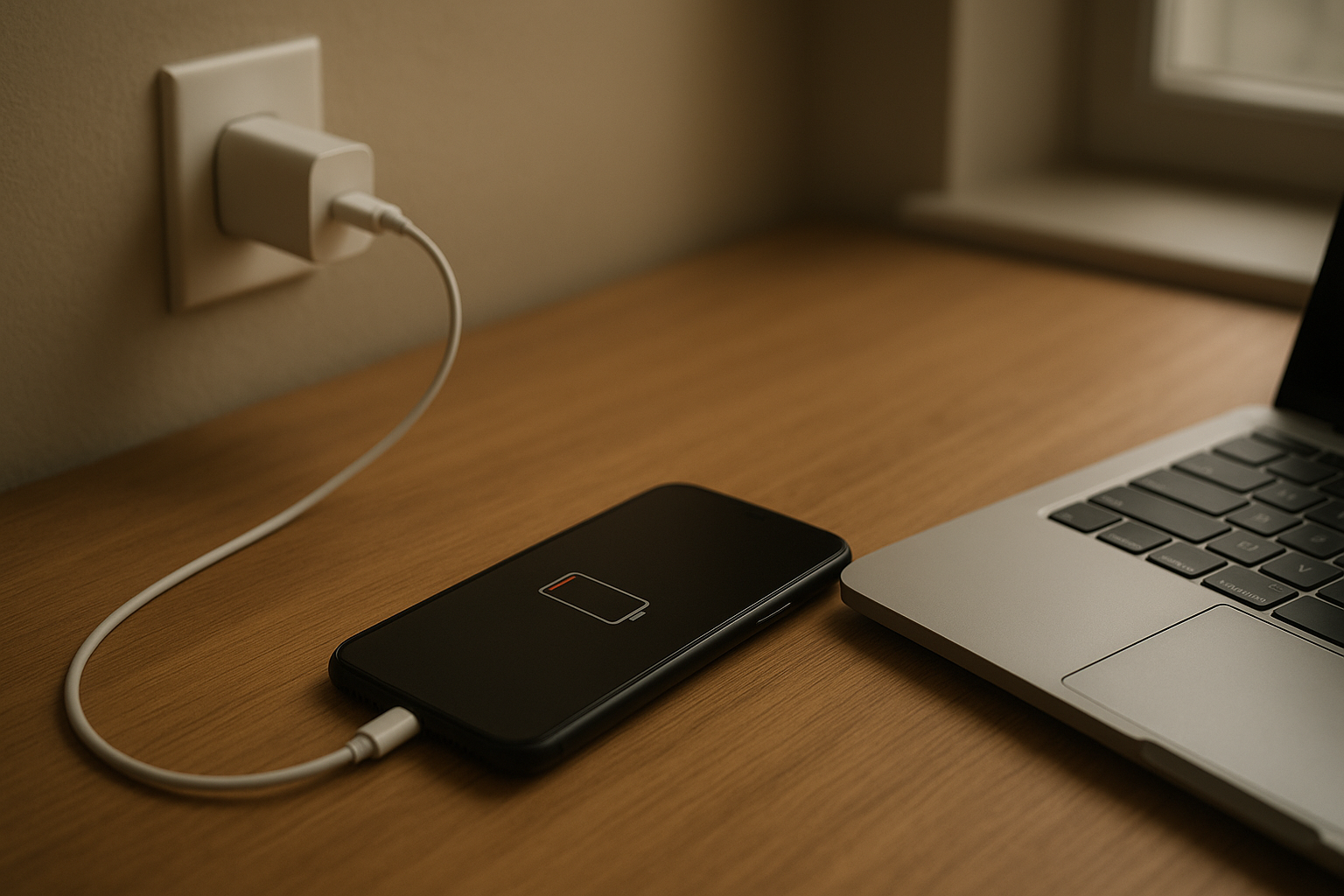
You notice it on an ordinary day. You unplug your phone in the morning, answer a few messages, maybe check directions or email, and by lunch the battery is already much lower than it should be. Not dead, but dropping in a way that makes you uneasy. Suddenly you are doing math in your head about whether it will survive the drive home, the afternoon meeting, or one more call.
That is what makes fast battery drain so irritating. It does not always arrive with a dramatic failure. Sometimes it just starts acting different. The device still turns on. It still works. But the trust is gone.
Something feels off.
Why This Situation Feels So Frustrating
A battery problem is never just about percentages. It gets under your skin because your device is tied to so much of daily life. Work messages, maps, bank alerts, family calls, boarding passes, two-factor codes, school updates. When the battery starts fading too quickly, staying connected turns into a constant small worry that follows you around all day.
And once you notice it, it is hard to ignore. You start checking the battery icon more than you want to admit. You lower brightness, close apps, turn off features, and still feel like you are losing ground. It becomes one more thing to manage when you already have enough to think about.
There is also that uncomfortable question in the background: is this device getting old? Is this the beginning of the end? A lot of people can live with a cracked case or a slightly slow app, but bad battery life feels more serious because it affects everything. It makes the whole device seem less dependable.
It’s not completely broken. But it’s not right either.
What People Usually Notice First
For a lot of people, the first sign shows up during a normal workday. The phone that used to make it to dinner suddenly needs a charge by mid-afternoon. A laptop that once handled meetings and emails now starts looking shaky before the day is over. You are not doing anything unusual, which is part of why it feels so strange.
Another common moment is waking up and finding a device drained after leaving it overnight. That can be especially annoying because it creates immediate disruption. You reach for your phone first thing in the morning and instead of checking your day, you are hunting for a charger. It sets a bad tone fast.
Travel makes the problem feel worse. When you are away from home, battery drop is not just inconvenient, it feels risky. A phone running low while you are navigating, waiting for a ride, or trying to keep track of a flight can make a small problem feel much bigger. Even a healthy battery seems more precious when there is no outlet nearby.
And then there is heat. A device that gets warm during normal use tends to raise immediate suspicion. Maybe it is only warm after browsing, texting, or streaming something basic. Maybe it was fine last week and now it feels hot in your hand. That kind of sudden change gets your attention.
It can make you doubt the whole thing.
Why It Can Be Confusing
Battery drain is frustrating partly because the cause is not always obvious. Sometimes it really is an aging battery that no longer holds charge the way it used to. Other times it is an app running wild in the background, a recent update, poor signal forcing the device to work harder, or charging habits finally catching up over time. From the outside, those very different problems can all look the same.
That is where people start second-guessing themselves. Did a new app cause this? Is the battery actually wearing out? Why did it start all of a sudden when nothing seems different? If the device is still usable, it can be hard to tell whether this is a passing issue or an early warning sign.
If you are trying to make sense of it, this look at quick battery drain covers some of the common reasons in a straightforward way. Sometimes just seeing the possibilities laid out clearly helps take the panic down a notch.
Because that uncertainty is the real headache. Not knowing whether to ignore it, fix it, or start budgeting for a replacement is what wears people out.
The Hidden Impact on Daily Use
When a battery becomes unreliable, the effect goes well beyond inconvenience. Productivity takes a hit because you stop using the device freely. You hesitate before opening an app you need. You put off calls. You keep power-saving settings on even when they make the device less pleasant to use. You carry cables and power banks everywhere, just in case.
That extra mental load adds up. Instead of the device quietly supporting your day, it starts demanding attention. You think about battery before leaving the house. You think about battery before starting a video call. You think about battery before going to bed. It sounds small until it becomes routine.
There is a deeper trust issue too. We rely on these devices for peace of mind more than we realize. A charged phone means you can reach someone, find your way, respond quickly, handle a problem. When the battery no longer feels dependable, that sense of backup disappears. The device is still there, but it stops feeling solid.
That is the part people do not always talk about. It changes how safe and prepared you feel.
When It’s Probably Nothing Serious
Not every battery scare means the device is dying. Sometimes there is a temporary spike in power use after a software update, after restoring data, or after installing a new app that is more active than expected. Bad cell signal can also drain a battery faster than usual without meaning anything is permanently wrong. A few unusually heavy-use days can make a healthy battery seem worse than it is.
If the drain settles down after a day or two, if the device is not overheating constantly, and if charging still feels normal, there is a good chance the issue is manageable. Annoying, yes. But not necessarily serious.
Still, people notice patterns for a reason. If your gut says something changed, it probably did.
When You Should Pay More Attention
There are times when quick battery drain deserves a closer look. If the battery falls rapidly even during light use, if the device is getting unusually warm for no clear reason, or if it loses a big chunk of power overnight again and again, that is no longer easy to brush off. The same goes for devices that charge very slowly, shut down unexpectedly, or jump around in battery percentage.
Age matters too. An older phone or laptop may simply be reaching the point where the battery cannot keep up with modern daily use. That does not always mean replacing the whole device, but it does mean the problem is less likely to disappear on its own.
This is usually the stage where people start wondering whether repair is worth it. That can be a frustrating place to sit. You do not want to spend money too early, but you also do not want to keep living around a battery that cannot be trusted.
Simple Ways to Improve the Situation
When battery drain starts creeping in, the most helpful approach is usually the least dramatic one. Pay attention to whether the issue started after an update, a new app, or a change in usage. Notice whether it happens everywhere or mostly in weak-signal areas. Check whether one part of the day seems worse than the rest. Small observations can tell you more than random setting changes ever will.
It also helps to be realistic about device age. If a battery has been through years of daily charging, some decline is normal. Keeping software current, reducing unnecessary background activity, and avoiding extreme heat can all help, but they are not magic. Sometimes improvement is modest, not dramatic.
If the device still fits your life well otherwise, a battery replacement may make more sense than replacing the whole thing. If the device has other issues piling up too, replacement starts to look more reasonable. There is no perfect answer there. Just a practical one.
And honestly, sometimes the best relief comes from having a clear explanation. Even if the battery is aging, at least you know what you are dealing with.
Conclusion
Fast battery drain is one of those problems that seems small until it starts interfering with ordinary life. Then it becomes hard to ignore. It adds stress, breaks routines, and chips away at your confidence in a device you depend on every day.
The good news is that sudden drain does not always mean the device is done for. But it does mean something changed, and that change is worth paying attention to. If the problem is mild, it may settle down or be manageable with a few adjustments. If it keeps happening, gets worse, or starts coming with heat and shutdowns, that is your sign to take it more seriously.
You should not have to plan your day around a battery icon. When that starts happening, the issue is real, even if the device still technically works.
That is usually when people know. Something has to give.