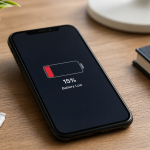
Fast battery drain is usually caused by one of four things: apps and services running in the background, unusually high power use (bright screen, GPS, weak signal), an aging battery that can’t hold charge, or a hardware fault that wastes power. The quickest way to isolate the cause is to check battery usage first, then reduce power demand, and finally assess battery health and heat.
On many devices, a normal battery drop is around 5–15% per hour with regular use, and only a few percent overnight in standby. If you’re losing 20–40% per hour during light use or 10%+ overnight, something is likely running, the device is working too hard, or the battery is degraded.
If you need a fast fix
Restart the device, then turn on Battery Saver/Low Power Mode and lower screen brightness to 30–50%.
Turn off high-drain radios you don’t need right now (GPS/location, Bluetooth, hotspot), and switch from 5G to LTE if your signal is weak.
Check battery usage and force-close or uninstall the top draining app you don’t recognize or don’t need.
Quick Diagnosis Table
Symptom
Most likely cause
Battery drops fast even when you’re not using the device (overnight drain)
Background processes, push sync loops, poor signal causing constant radio activity
Battery drains mostly while the screen is on
High brightness, high refresh rate, heavy apps (games/video), screen or GPU power draw
Battery percentage jumps, shuts down early, or goes from 30% to 5%
Battery degradation or a failing battery gauge (calibration issue or worn cells)
Device is warm/hot during light use or while idle
Runaway app, stuck update/backup, malware, or hardware fault increasing power use
Fast drain started right after an update or new app install
Misbehaving app, background re-indexing after update, corrupted cache, new settings
Why This Happens
A battery drains quickly when the device is using more power than normal or when the battery can no longer store as much energy as it used to. Power use spikes from the screen, the cellular modem (especially in weak signal areas), location services, and busy apps running in the background.
Real-world examples are common: a social app repeatedly refreshing in the background, cloud photos re-uploading, a smartwatch app constantly syncing, or a phone hunting for signal in a basement. Even if you aren’t actively using the device, background checks and radio activity can quietly drain the battery.
In short, the symptom (rapid drain) comes from either extra work being done behind the scenes, higher demand from settings and environment, or less available capacity because the battery has aged or something is failing.
Most Common Causes (Ranked)
1) Background app activity: An app may keep waking your device, syncing, tracking location, or refreshing content even when you’re not using it.
2) High screen and performance settings: Brightness, high refresh rate, always-on display, and long screen timeout can make the display the biggest power drain.
3) Weak signal or heavy network use: Poor cellular reception, switching towers, and constant data transfers (uploads, streaming, hotspot) make the modem work harder.
4) Battery degradation: Over time, batteries lose capacity and voltage stability, causing faster drops and earlier shutdowns even if your usage is the same.
5) Post-update indexing or stuck system tasks: After updates the device may rebuild search indexes, optimize apps, or re-sync, which can temporarily increase drain.
6) Hardware faults or accessory issues: A failing battery, damaged charging circuitry, or a bad cable/port causing repeated charge reconnects can waste power and create heat.
If changes you make improve battery life over a day or two, that usually indicates a settings/app issue rather than a serious hardware problem.
How to Check the Problem Safely
Check 1: Open Battery settings and review usage for the last 24 hours (or since last full charge). Note the top 3 apps and whether the drain is “background” or “screen on.”
Check 2: Look for heat clues: feel the back of the device after 5–10 minutes of idle time. Warmth while idle often points to a runaway app, syncing loop, or hardware issue.
Check 3: Check signal conditions: if you have 0–2 bars often, try Airplane Mode for 30 minutes at home (Wi-Fi off) and compare drain. Big improvement suggests cellular modem drain.
Check 4: Check battery health (if available). On some phones you can see maximum capacity or battery health; a low percentage strongly suggests aging is the main cause.
Check 5: Review recent changes: new apps, VPNs, device management profiles, OS updates, or new Bluetooth accessories. Drain that starts suddenly usually ties to a recent change.
Safety note: if the device is very hot, swelling, or smells odd, stop using it and do not charge it until it’s inspected.
How to Fix It
Fix 1 (easiest): Restart the device and turn on Battery Saver/Low Power Mode. This immediately reduces background activity and lowers performance power draw.
Fix 2: Identify and control the top draining apps: disable background refresh, reduce notifications, limit location access to “While using,” or uninstall the worst offender. This stops hidden background drain.
Fix 3: Reduce screen and radio load: lower brightness, shorten screen timeout, disable always-on display, and switch from 5G to LTE in weak areas. This targets the most power-hungry parts.
Fix 4: Clean up syncing and network tasks: pause cloud backups temporarily, stop large uploads, and turn off hotspot. If drain is overnight, limit auto-sync for email/social apps.
Fix 5 (advanced/last resort): Back up your data and reset settings or perform a full reset if a system issue is suspected, or replace the battery if health/capacity is low. This removes corrupted configurations and restores normal power behavior.
Signs of Battery or Hardware Damage
Battery percentage drops in large jumps or the device shuts down at 10–30% remaining.
Device gets hot during idle, basic messaging, or while charging, especially if it’s hot in the same spot every time.
Battery or screen swelling, gaps in the case, or the device no longer sits flat.
Charging is unstable (connect/disconnect sounds, charging pauses), or the port feels loose and charging only works at certain angles.
Battery life is dramatically worse than it was a few months ago with the same habits.
Device cannot reach 100% or drains extremely fast immediately after unplugging.
Noticeable chemical smell, discoloration around the battery area, or unusual crackling sounds.
When Repair Is No Longer Worth It
If the battery health is low and the device is also slow, overheating, or no longer receiving security updates, replacement is often the better choice. Battery replacement is usually worthwhile when the device is otherwise reliable and you can restore normal runtime with a single part.
As a rule, consider repair if the battery replacement cost is modest compared to the value of the device and you plan to keep it for at least another year. Consider replacement if you need multiple parts (battery plus charging port or mainboard), or if the device still dies quickly after a known-good battery is installed.
How to Prevent This Problem in the Future
Check battery usage monthly and remove apps that show high background drain without a clear reason.
Keep brightness moderate and use auto-brightness; reduce screen timeout and avoid always-on display if you don’t need it.
Limit location access and background refresh for social, shopping, and news apps that refresh often.
In poor signal areas, prefer Wi-Fi calling (if available) or switch to LTE to reduce constant modem hunting.
Keep the device cool: avoid charging under pillows, in direct sun, or during heavy gaming, because heat accelerates battery wear.
Charge in shorter bursts when convenient rather than running to 0% often; avoid leaving it at 100% for long periods if your device supports optimized charging.
Install updates, but watch for post-update drain for 24–48 hours; if it persists, review app permissions and background activity.
FAQ
Why is my battery draining fast all of a sudden?
A sudden change usually points to a recent app install, an OS update doing background work, or a setting change like location services or hotspot being turned on. Start by checking Battery usage to find the top draining app and whether it’s mostly “background” drain. If it began right after an update, give it a day to finish optimization, then re-check.
How can I tell if it’s the battery or an app?
If Battery settings show one or two apps dominating drain, and limiting their background activity improves runtime, it’s likely an app or setting. If no app stands out but the device still drops quickly, shuts down early, or has a low battery health/capacity reading, the battery is more likely the culprit. Heat while idle also strongly suggests software or hardware doing unexpected work.
Is it normal for batteries to drain faster over time?
Yes, rechargeable batteries wear down and hold less charge as they age, especially with heat exposure and lots of full charge cycles. A gradual decline over months is normal, but sharp drops, random shutdowns, swelling, or excessive heat are not. If the device otherwise works well, a battery replacement often restores most of the original runtime.
Mark Reynolds covers battery health, charging limits, and common device issues with a focus on clarity and practical fixes. For a deeper look, visit the full troubleshooting guide.