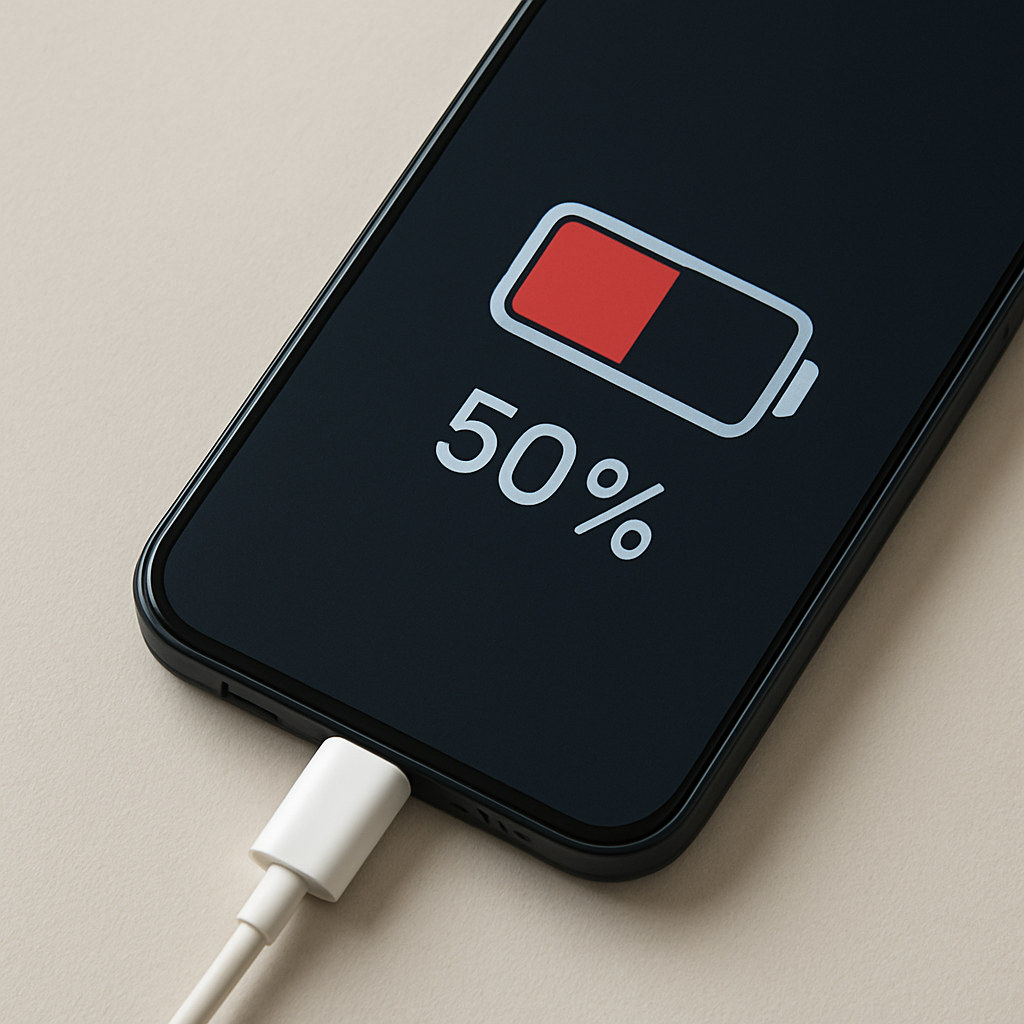
You plug in your laptop before class, glance over a few minutes later, and the battery is sitting at 50%. Still 50% after another check. The charging icon is there, the cable seems fine, and yet the number refuses to move. That moment gets under your skin fast, especially when you were counting on a full charge and a normal day.
I’ve had that kind of half-charged standoff happen at exactly the wrong time. Right before a meeting. Right before leaving the house. Right when I needed the device to stop being a question mark and just work. It’s not completely broken. But it’s not right either.
Why This Situation Feels So Frustrating
Part of what makes this so aggravating is that battery problems always seem to show up when you need certainty. Not eventually. Now. You may want your battery to last longer over the life of the device, but that long-term goal feels abstract when you need 100% before a commute, a class, or a full day away from an outlet.
And once you notice it, it’s hard to ignore.
A battery stuck at 50% creates a strange kind of tension. You start wondering whether the device is protecting itself, whether a setting got switched on somewhere, or whether the battery is simply wearing out. The number on the screen should feel straightforward, but suddenly it doesn’t. It feels slippery. Untrustworthy.
That loss of trust is the real problem. When one phone or laptop handles work, school, messages, maps, video calls, and family check-ins, a charging issue stops being a small annoyance. It becomes a problem hanging over the rest of the day.
What People Usually Notice First
Usually, it starts in a very ordinary moment. A student plugs in a laptop between classes and expects to top it off, only to see it stall halfway. A remote worker notices the battery percentage won’t climb and immediately starts doing mental math about how long the next meeting will last. Someone charging a phone before leaving home keeps checking the screen every few minutes, wondering whether it will hold up through errands, traffic, and a long afternoon.
For older devices, the feeling can be even heavier. An older person may look at a tablet or phone that has been dependable for years and quietly ask the question nobody wants to ask: can I still trust this thing? That’s a hard shift. A device that used to feel steady suddenly feels conditional.
Something feels off.
And the odd part is that the device may look perfectly normal otherwise. No warning message. No dramatic failure. It simply stops short, as if it has made a decision without telling you why.
Why It Can Be Confusing
This issue is confusing because sometimes it really does look broken when it isn’t. Some laptops and phones include battery health features that intentionally stop charging at a certain level to reduce wear. That can be useful in theory, but in real life it often feels hidden, especially if you didn’t turn it on yourself or forgot it was there. If you want a fuller explanation of that behavior, this look at why a battery may stop charging past 50 percent covers the common reasons in plain language.
But even when the explanation is harmless, the experience still feels unsettling. The battery number is supposed to be one of the few clear things on a device. Instead, it can seem unreliable. One day it charges normally. Another day it pauses. In one room it behaves one way, with a different charger or after a restart it behaves another way. The same device can seem moody.
That’s where users get stuck. Is this normal behavior? Is it a smart battery feature? Is the charger weak? Is the battery aging? You can feel yourself sliding from mild curiosity into low-grade panic, mostly because the device isn’t giving you a simple answer.
The Hidden Impact on Daily Use
The hidden cost of this kind of battery issue is how quickly it changes the way you plan your day. A laptop that may not charge fully means you sit closer to outlets, carry a charger everywhere, and keep one eye on the battery instead of on what you’re trying to do. A phone that tops out at 50% can turn basic errands into a small logistics exercise.
It wears on you.
That matters more than people sometimes admit. Technology is supposed to remove friction, not create a low hum of worry in the background. When a device stops acting predictably, it chips away at productivity and confidence at the same time. You spend energy managing the device instead of using it.
There is also a bigger feeling underneath all this: the gap between what users expect and what devices decide. You plug something in, so naturally you expect it to charge. That seems obvious. When the device behaves differently because of hidden battery protection, power management, temperature limits, or age, it can feel like control has quietly shifted away from you. Not dramatic. Just enough to be annoying every single day.
When It’s Probably Nothing Serious
Sometimes a battery stopping at 50% is not a sign of damage at all. If the device recently updated, changed power settings, or has a battery care feature turned on, the pause may be intentional. The same goes for moments when a device is warm after heavy use. Charging can slow down or temporarily stop because the system is trying to protect the battery rather than fill it as fast as possible.
That can be frustrating, but it is not the same thing as failure.
If the device still runs normally, holds a reasonable charge once unplugged, and occasionally returns to normal charging behavior, there is a fair chance the issue is related to settings, charging conditions, or battery health management rather than a serious hardware fault.
When You Should Pay More Attention
It deserves closer attention when the problem becomes consistent and starts affecting normal use. If the battery always stops at the same percentage, drains unusually fast, shuts down unexpectedly, or only charges with certain cables or in certain positions, that points to something more than a harmless pause. The same goes for devices that get unusually hot, show service warnings, or suddenly feel less reliable week after week.
There’s also the simple reality of age. Batteries wear down. They do not usually fail in one dramatic moment; they become less dependable in small ways until the pattern is hard to ignore. If your device is several years old and the charging behavior has changed noticeably, it may be less about a mystery and more about wear finally showing up in daily life.
Simple Ways to Improve the Situation
The most helpful approach is usually the least dramatic one. Check whether a battery protection or optimized charging setting is active. Use a charger and cable you trust. Let the device cool down if it has been working hard or sitting in heat. Keep software reasonably current. None of that is glamorous, but it often clears up the mismatch between what the device is doing and what you expect it to do.
It also helps to watch the pattern rather than one bad charging session. A single stall can be a fluke. Repeated stalls tell a clearer story. If the issue keeps returning, it may be time to have the battery checked or consider whether the charger, port, or battery itself is no longer dependable enough for your routine.
That’s really the standard people care about in the end: dependable enough.
Conclusion
A battery stuck at 50% sounds minor until it happens on a day when you need your device without hesitation. Then it feels personal. Not because the number itself is dramatic, but because it shakes trust in something you rely on constantly.
Some cases are harmless and intentional. Some are early signs that a battery or charging setup needs attention. The hard part is that the first few times, they can feel exactly the same.
And that’s the real frustration. You are not just trying to charge a device. You are trying to figure out whether your phone or laptop is still on your side. When daily life depends on it, that question matters a lot more than 50% suggests.