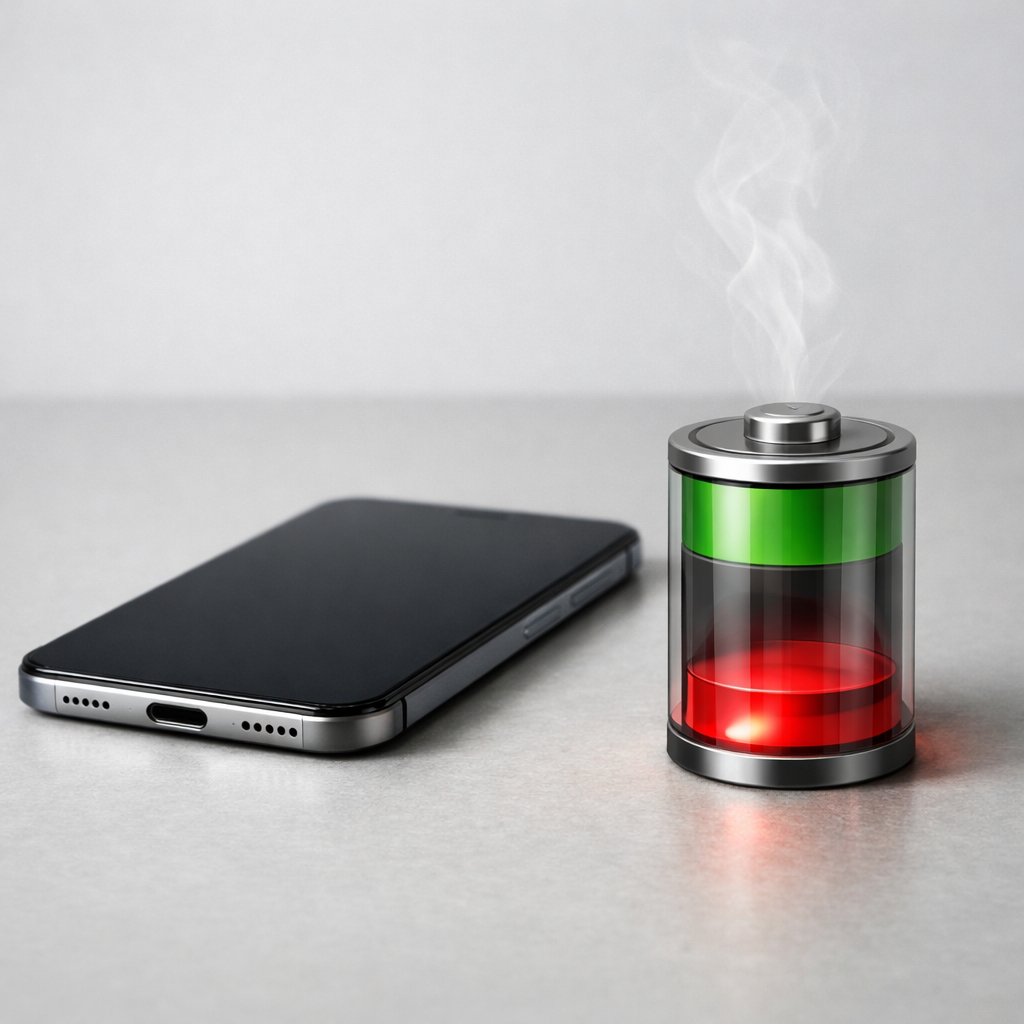
Device Battery Drains Even When Off — Hardware Leak or Faulty Component?
Quick Answer
If your battery drops noticeably while the device is fully powered off, the most likely cause is a failure in the power input path. This means a component near the charging port or battery connection is leaking power or not properly isolating the battery when the device is off.
A healthy device should lose very little charge when shut down (often just a few percent over several days). If you’re losing 10–30% overnight, or the battery hits 0% after a day or two of being off, that’s usually not “normal standby” behavior.
If you need a fast fix
Charge to around 50–80%, power the device off, and disconnect everything (charger, cable, USB devices, case accessories), then re-check the battery level after 8–12 hours.
Inspect and gently clean the charging port with a dry, non-metal tool and a burst of air (no liquids), then test again with a known-good cable and charger.
If the battery drops fast while off, stop leaving it plugged in unattended and schedule service, because power-path faults can worsen and sometimes create excess heat.
Quick Diagnosis Table
Symptom
Most likely cause
Battery loses 10–30% overnight even when fully powered off
Power input path leakage (charging IC, MOSFET, or protection circuit not isolating battery)
Battery drains faster after using a certain charger or cable
Port/charger damage causing partial short or stress to the charging circuit
Device feels warm near the charging port while off
Short/leak in the power path around the port, charging chip, or board-level corrosion
Battery percentage “jumps” or is inaccurate after reboot
Battery gauge calibration issue or unstable battery connection/power management fault
Charge works but drains quickly as soon as you unplug
Failing power-path component forcing the battery to supply unintended load
Why This Happens
When a device is truly off, it should disconnect most circuits from the battery and only allow tiny background power use for things like the real-time clock. If the power input path is damaged, the battery can keep feeding parts of the charging circuit or nearby components even while the screen and main system are off.
Real-world examples include a phone that started draining after a drop that loosened the charging port, a tablet that got moisture in the port and developed corrosion, or a laptop that only drains when the charger is connected because the charging IC is partially shorted.
In simple terms: a leaky or faulty component near the charging port turns “powered off” into “still sipping power,” so the battery empties even though you aren’t using the device.
Most Common Causes (Ranked)
1) Damaged charging port or contaminated port area: Bent pins, lint, or corrosion can create a weak short that slowly drains the battery through the input circuitry.
2) Failing power management or charging IC: The chip that controls charging and power switching can partially fail and allow current to flow when it shouldn’t.
3) Shorted or leaking protection component (MOSFET/diode/filter): Small parts in the input path can degrade after heat, liquid exposure, or a power surge, leading to constant drain.
4) Corrosion on the board near the port: Moisture can leave mineral deposits that become conductive, especially around the charging circuitry.
5) Battery connector not seated or damaged: A loose or oxidized connection can confuse power sensing and cause abnormal power behavior, including drain and percentage jumps.
6) “Off” is not truly off (firmware/fast boot behavior): Some devices use fast startup or always-on features that mimic shutdown, but a hardware leak typically drains faster and may add warmth.
If the drain slows down after cleaning the port, switching accessories, or turning off fast startup, that gradual improvement usually indicates the issue was external or configuration-related rather than a hard board fault.
How to Check the Problem Safely
Check 1: Verify it’s truly shut down, not sleeping. Power it off completely, wait 30 seconds, then briefly press the power button to confirm it doesn’t wake instantly.
Check 2: Do an “off-drain test.” Note the battery percentage, power off for 8–12 hours, then power on and compare. Repeat once to confirm it’s consistent.
Check 3: Test with everything disconnected. Remove USB devices, memory cards, cases with battery features, and any magnetic or wired accessories, then repeat the off-drain test.
Check 4: Inspect the charging port with a flashlight. Look for lint, discoloration, green/white residue, or bent pins, which often point to port contamination or corrosion.
Check 5: Try a known-good charger and cable only. If the problem started after using a cheap adapter or damaged cable, switching back can reveal whether the input path is being stressed.
Safety note: if you notice heat, a chemical smell, swelling, or crackling sounds, stop testing and seek professional help immediately.
How to Fix It
Fix 1 (easiest): Clean the charging port dry and gently. Removing lint and debris can stop partial shorts and improve the input path’s electrical contact.
Fix 2: Replace the cable and charger with certified, reputable ones. Unstable voltage or poor grounding can aggravate marginal charging circuits and cause off-drain patterns.
Fix 3: Disable fast startup/always-on features (when available). On some laptops and phones, “shutdown” may keep parts of the power system active, which can look like abnormal drain.
Fix 4: Have a technician inspect the charging port and power input components. A port replacement or board-level repair (charging IC, input MOSFET, protection parts) is often the real fix when drain continues while off.
Fix 5 (advanced/last resort): Replace the battery only after input-path checks. A weak battery can exaggerate percentage drops, but if the device truly drains while off, the charging/power path is commonly the root cause.
Signs of Battery or Hardware Damage
Battery drains rapidly even when the device is fully powered off and disconnected from everything.
Noticeable warmth near the charging port or battery area while the device is off.
Charging becomes unreliable (connects/disconnects, only charges at certain angles, or charges very slowly).
Battery percentage drops in big jumps (for example, 60% to 30% quickly) or the device shuts off unexpectedly.
Swelling, bulging, or lifting screen/back panel, or the device rocking on a flat surface.
Burnt smell, discoloration around the port, or visible corrosion (green/white residue).
Device only behaves normally when plugged in, but drains quickly once unplugged.
When Repair Is No Longer Worth It
If the drain is caused by a board-level power input fault (charging IC, corroded traces, or shorted components), repair can be more expensive than a battery replacement and sometimes approaches the value of older devices. It may also come with uncertainty if corrosion has spread.
As a rule, consider replacement when repair costs exceed about 40–60% of the device’s current market value, or if the device shows multiple red flags like heat plus swelling plus unstable charging. For newer or premium models, a proper port/power-path repair is often worth it because it restores safe, predictable charging.
How to Prevent This Problem in the Future
Use high-quality chargers and cables that match the device’s power requirements to reduce stress on the charging circuit.
Avoid charging in wet, dusty, or sandy environments; contamination in the port is a common starting point for power-path leakage.
Unplug by gripping the connector, not yanking the cable, to prevent port solder and pin damage.
Keep the charging port clean and dry; occasional dry inspection with a flashlight helps you catch lint buildup early.
Don’t leave the device pressed or bent while a cable is inserted, which can crack port joints or strain the input path.
After any liquid exposure or “port got wet” warning, stop charging until it’s fully dry; charging a damp port can accelerate corrosion.
Prevent overheating during charging; excessive heat can weaken power management components over time.
FAQ
Is it normal for a device to lose battery when it’s powered off?
A small amount of loss can be normal, especially over multiple days, because some circuits keep time and manage battery safety. Rapid drain overnight is not normal and often points to a hardware issue, commonly in the charging and power input path. If the device is warm while off, treat it as a probable fault.
Can a bad charger cause the battery to drain when the device is off?
Yes, a poor-quality charger or cable can trigger or worsen input-path problems by delivering unstable power or stressing protection components. Sometimes the drain continues even after you stop using that charger because damage has already occurred. Testing with a known-good charger helps separate accessory issues from internal faults.
Will replacing the battery fix this problem?
Sometimes, but not always. If the battery itself is weak, a replacement can improve percentage drops, but it won’t stop a true off-state drain caused by a leaking charging circuit. If the battery still drops significantly while the device is off, a port or power-path repair is usually needed.
Mark Reynolds explains battery and charging issues in a practical way, focusing on what actually helps in real situations. For more guidance, see the step-by-step troubleshooting guide.