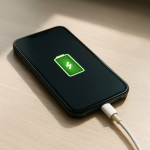
Phone Not Charging Overnight — Power Source or Battery Protection Issue?
Quick Answer
If your phone doesn’t reach 100% overnight (or is barely higher in the morning), the most likely reasons are an unstable power source that stops charging intermittently or built-in battery protection that intentionally slows, pauses, or limits charging while you sleep.
This is common with “optimized charging” features that hold the charge around 80% for hours and finish closer to your usual wake time. If the phone is still below your normal level after 8–10 hours, the problem is more likely power delivery (outlet, cable, adapter, charging pad, or loose connection).
If you need a fast fix
- Plug into a different wall outlet (not a power strip), then re-seat both ends of the cable until they feel firmly connected.
- Swap to a known-good cable and charger block (ideally the original or a certified equivalent) and test for 15 minutes to confirm the battery percentage is rising steadily.
- Turn off Optimized/Adaptive Charging for one night and keep the phone cool (remove thick cases, don’t cover it) to see if it reaches 100%.
Quick Diagnosis Table
| Symptom | Most likely cause |
|---|---|
| Charging shows on/off during the night or you wake to a lower battery than expected | Unstable power from a loose outlet, power strip toggling, or a worn cable/connector |
| Stops around 75–85% for hours, then finishes near morning (or never finishes if you wake early) | Battery protection features (Optimized/Adaptive Charging) intentionally pausing charging |
| Only charges when the phone is positioned “just right” or bumping it stops charging | Dirty/loose charging port, bent connector, or failing cable end |
| Wireless charging is slow overnight or ends at a low percentage | Pad misalignment, thick case, heat throttling, or a low-power adapter feeding the pad |
| Charges very slowly overnight and the phone feels warm in the morning | Heat-triggered charging limits or background activity keeping the phone from topping off |
Why This Happens
Overnight charging seems simple, but your phone constantly decides how fast to accept power based on temperature, battery health, and the quality of power coming from the charger. If any part of the chain is unstable, the phone may repeatedly start and stop charging without you noticing.
At the same time, many phones protect battery lifespan by avoiding sitting at 100% for hours. They may hold the charge around 80% and only finish later, especially if the phone “learns” your schedule. If you plug in late, travel, or change alarms, the phone may not finish by the time you unplug it.
In short: unstable power delivery or a protective charging limit can both look like “it didn’t charge overnight,” but the fix depends on whether charging is being interrupted or intentionally slowed.
Most Common Causes (Ranked)
- 1) Unstable outlet or power strip: Loose wall sockets, switched outlets, or overloaded power strips can cut power briefly and stop charging for long stretches.
- 2) Battery protection features (Optimized/Adaptive/Smart charging): The phone may pause at 80% and wait to finish, which is normal but confusing if you expect 100% by morning.
- 3) Worn cable or weak charger block: Cables fail more often than chargers, and a low-quality adapter may not hold a stable output under small movements or heat.
- 4) Dirty or loose charging port: Pocket lint can prevent a full connection, so the phone charges only intermittently or at a reduced rate.
- 5) Heat limiting (thermal throttling): A warm room, thick case, or charging on a bed can trigger the phone to slow or stop charging to protect the battery.
- 6) Wireless charging misalignment or low-power setup: Slight misplacement, a case with magnets, or using an underpowered brick can cause slow charging or frequent disconnects overnight.
If things improve gradually after swapping the cable/adapter or changing the outlet, that usually indicates a power delivery issue rather than a failing battery.
How to Check the Problem Safely
- Check 1: Try a different wall outlet for one full charge cycle, preferably in another room, and avoid power strips to rule out intermittent power.
- Check 2: Watch the battery percentage for 10–15 minutes while plugged in; it should rise steadily (even if slowly) without repeatedly switching between charging and not charging.
- Check 3: Inspect and gently clean the charging port by shining a light inside; if you see lint, remove it carefully with a wooden toothpick (no metal).
- Check 4: Check battery settings for Optimized/Adaptive Charging and note whether it is enabled; if it is, disable it for one night as a test.
- Check 5: If using wireless charging, remove the case and re-center the phone on the pad, then confirm the charging indicator stays on for at least 5 minutes.
Safety note: if the phone, cable, or charger becomes unusually hot or smells like burning, unplug it immediately and do not continue testing with that accessory.
How to Fix It
- Fix 1 (easiest): Use a different wall outlet and plug the charger directly into the wall to eliminate flaky power strips and loose connections.
- Fix 2: Replace the cable first, then the charger block if needed; a high-quality, certified cable is the most common “overnight charging” fix because it prevents small disconnects.
- Fix 3: Turn off Optimized/Adaptive Charging for one night to confirm whether battery protection is the reason it stops at ~80%; turn it back on afterward if you prefer battery longevity.
- Fix 4: Reduce heat while charging by removing thick cases, keeping the phone on a hard surface, and avoiding charging under pillows or blankets; cooler batteries accept charge more consistently.
- Fix 5 (advanced/last resort): Backup your data and update the phone OS, then reset charging-related settings (or reboot in safe mode where available) to rule out a misbehaving app keeping the phone awake and warm overnight.
Signs of Battery or Hardware Damage
- Battery percentage drops quickly even after it finally reaches 100%.
- Phone gets hot during normal charging, especially near the battery area, not just the screen.
- Charging only works at certain angles even with a new cable (possible damaged port).
- Random reboots, sudden shutdowns at 20–40%, or “battery service” warnings in settings.
- Visible swelling, screen lifting, or the phone no longer sits flat on a table.
- Crackling, buzzing, discoloration, or a burnt smell from the charger, cable, or port.
- Moisture warnings that persist for days or corrosion visible inside the port.
When Repair Is No Longer Worth It
If the issue is a bad cable, adapter, or dirty port, the fix is usually inexpensive and worth doing. But if you have battery swelling, repeated overheating, or the charging port needs replacement on an older device, repair costs can approach the value of the phone.
As a rule, if a battery replacement plus labor is more than about 30–40% of what you would pay for a comparable replacement phone, consider upgrading instead. If the phone is your daily essential and you can’t rely on overnight charging even after accessory swaps, the time cost alone can justify replacement.
How to Prevent This Problem in the Future
- Charge from a stable wall outlet and avoid worn power strips or loose extension cords.
- Use certified, good-quality cables and replace them at the first signs of looseness, fraying, or intermittent charging.
- Keep Optimized/Adaptive Charging enabled if you’re okay with not seeing 100% until near wake time; it can reduce battery wear long-term.
- Keep the phone cool overnight by charging on a hard surface and removing heavy cases if warmth is common.
- Clean the charging port occasionally and avoid stuffing the phone into linty pockets without a port cover.
- If you use wireless charging, align carefully, avoid thick/magnetic cases on the pad, and use the power adapter recommended for your charger.
- Limit overnight drain by closing heavy apps, disabling unnecessary hotspot/tethering, and ensuring your phone isn’t stuck searching for signal all night.
FAQ
Is it normal that my phone stops at 80% overnight?
Yes, on many phones this is a battery protection feature (often called Optimized or Adaptive Charging). It may hold around 80% for hours and finish closer to when it thinks you’ll unplug. If you need 100% earlier, disable the feature for that night or use a manual schedule if your phone supports it.
Why does my phone charge fine during the day but not overnight?
Overnight setups often use different outlets, power strips, or longer cables, and any of those can be less stable. Also, the phone may get warmer under blankets or in a case at night, which can slow charging. Try the same charger/outlet combo you use during the day and keep the phone uncovered as a test.
Will leaving my phone plugged in all night damage the battery?
Modern phones are designed to manage overnight charging and stop pulling full power when they’re topped up. The bigger issue is heat and sitting at 100% for long periods, which is why optimized charging exists. If your phone runs hot overnight, improve airflow, remove the case, and use a reliable charger.
For a full overview of this issue and step-by-step solutions, read the complete troubleshooting guide.
Mark Reynolds explains battery and charging issues in a practical way, focusing on what actually helps in real situations. For more guidance, see the step-by-step troubleshooting guide.