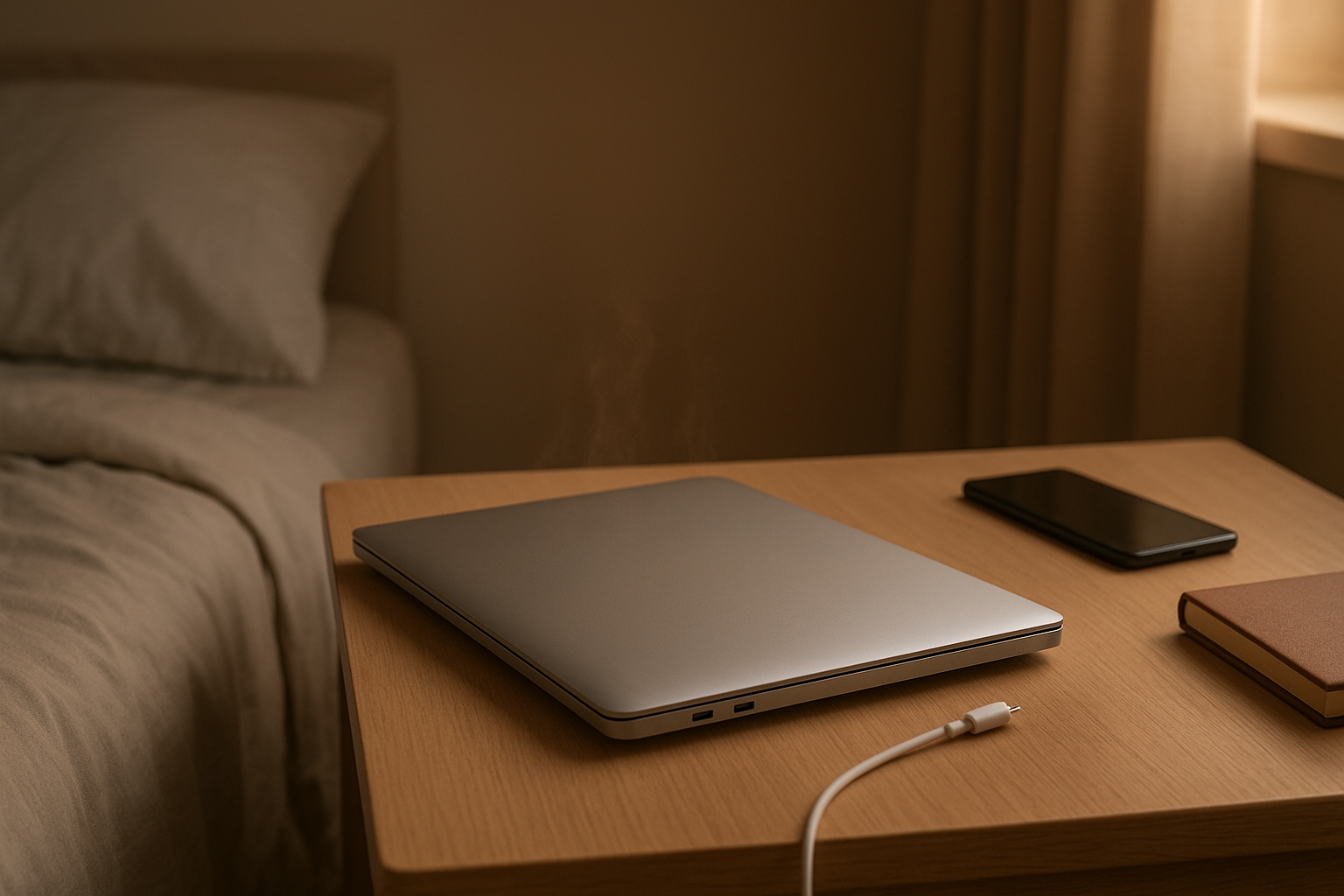
You close your laptop at night, thinking that is the end of it. Work is done, the lid is down, and the battery should be more or less where you left it in the morning. Then you open it the next day and somehow it has dropped far more than expected. Sometimes a little. Sometimes a lot. And once you notice it, it’s hard to ignore.
It gets worse when the laptop feels warm after being closed for hours, especially if it has been sitting in a bag. That is the part that makes people uneasy. A closed device is supposed to be resting. It is supposed to be quiet, cool, and predictable. When it is not, something feels off.
Why This Situation Feels So Frustrating
The annoying part is not just the battery loss itself. It is the feeling that you cannot fully trust the device to behave when you are not watching it. You think you are doing the sensible thing by closing the lid to save power, but the laptop seems to have other plans. That gap between what you expect and what actually happens creates a low-grade kind of stress.
People rely on laptops in a very ordinary, very constant way. For work, class, travel, bills, messages, and everything in between. So when a laptop drains battery while closed, it stops feeling dependable. You wanted convenience. You got uncertainty. That is what makes it linger in your mind.
It’s not completely broken. But it’s not right either.
What People Usually Notice First
Usually it starts with one small moment that seems easy to brush off. You close the laptop before bed with a healthy charge, then wake up to find the battery much lower than it should be. Maybe not dead, but low enough to make you pause. You tell yourself it might be a one-time thing.
Then it happens again during travel or a school day. You put the laptop away because you need to save every bit of charge, only to pull it back out later and find you lost far more power than expected. That can throw off the rest of the day fast, especially if you were counting on that battery.
Another common moment is when the laptop feels warm inside a sleeve or backpack. That gets attention immediately. A little drain is one thing. Heat is different. Heat makes it feel active, like something kept running when it should have stopped. That tends to turn simple annoyance into actual worry.
Why It Can Be Confusing
Part of the confusion comes from the fact that closed does not always mean off. For a lot of people, closing the lid means the laptop should be asleep and barely using anything. That seems reasonable. But modern laptops often keep doing small background tasks, checking for updates, maintaining connections, or shifting between power states in ways that are not obvious to the person using them.
That is why battery loss can seem inconsistent too. One night, maybe it drops only a few percent. Another night, it loses a large chunk. You did the same thing, but the result changed. That inconsistency makes the issue harder to trust and harder to explain.
And the warmth adds another layer. If the laptop looks off and has not been touched, warmth feels wrong. It creates that strange feeling of hidden activity, like the machine is doing something behind the scenes without your permission. If you want a clearer overview of why this keeps happening, it helps to remember that sleep and shutdown are not the same thing.
That is the part people do not love. Not knowing.
The Hidden Impact on Daily Use
This kind of problem chips away at confidence in a device you probably use every day. You stop assuming your laptop will be ready when you need it. Instead, you start checking the battery more often, carrying the charger more often, and making small backup plans just in case. None of that feels dramatic in the moment, but it adds friction to everything.
When you depend on the laptop for work, the problem feels bigger. Overnight drain can mean starting the day already behind. During travel, it means using power more cautiously instead of freely. At school, it can mean deciding whether to take notes, stream something, or save battery for later. The issue turns into a planning problem.
There is also the mental side of it. Technology is supposed to remove little worries, not create new ones. If your laptop seems asleep but keeps draining, it stops feeling like a tool under your control. It feels like something you have to monitor. That is tiring.
Really tiring.
When It’s Probably Nothing Serious
Sometimes the explanation is fairly ordinary. A laptop in sleep mode will usually still use some battery, and older batteries tend to lose charge less gracefully than new ones. A few percentage points overnight may not mean anything is failing. It may just reflect how that device handles sleep, age, and background activity.
If the drain is modest, the laptop stays cool, and the behavior is fairly consistent, it may be more of a quirk than a warning sign. Annoying, yes. But not necessarily dangerous. Some systems are simply better than others at staying quiet when the lid is closed.
When You Should Pay More Attention
If the battery drops heavily while the laptop is closed, or the machine feels noticeably warm in a bag, that deserves a closer look. The same goes for sudden changes. If it used to rest normally and now drains fast, that shift matters more than the exact number alone.
You should also pay attention if the battery life overall has become unreliable even when the laptop is in use, or if charging behavior starts feeling inconsistent too. Heat, rapid drain, and unpredictability together are harder to dismiss. Not every case points to damage, but it is worth taking seriously if the laptop is no longer acting like it can truly settle down.
Especially before a trip. Or a deadline.
Simple Ways to Improve the Situation
In everyday use, the most helpful thing is usually being more intentional about how the laptop rests. If you know you will not use it for a while, a full shutdown often gives more peace of mind than simply closing the lid. That is not always as convenient, but it is usually more predictable.
It also helps to notice patterns. If the drain is worst after certain apps were open, after updates, or while the laptop was packed away too quickly, those clues can tell you whether the problem is random or tied to something specific. You do not need to turn it into a science project. Just pay attention for a few days.
Keeping the system updated, reviewing sleep and power settings, and avoiding storing a warm laptop in a tightly packed bag can all make a difference without getting too deep into technical fixes. And if your battery is older, being realistic about its limits can save a lot of second-guessing.
Sometimes a small change helps more than expected.
Conclusion
A laptop that drains battery while closed is frustrating because it breaks a very basic promise. You thought it was resting. It was not. That mismatch creates annoyance, doubt, and sometimes real inconvenience at exactly the wrong time.
The good news is that this issue does not always mean something is seriously wrong. But it does deserve attention, especially if heat or heavy battery loss keeps showing up. The bigger problem is not just the percentage drop. It is the loss of trust. Once that happens, every closed lid starts to feel a little suspicious.
And that is why this issue sticks with people. It is small until it isn’t.