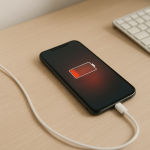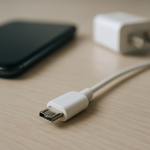
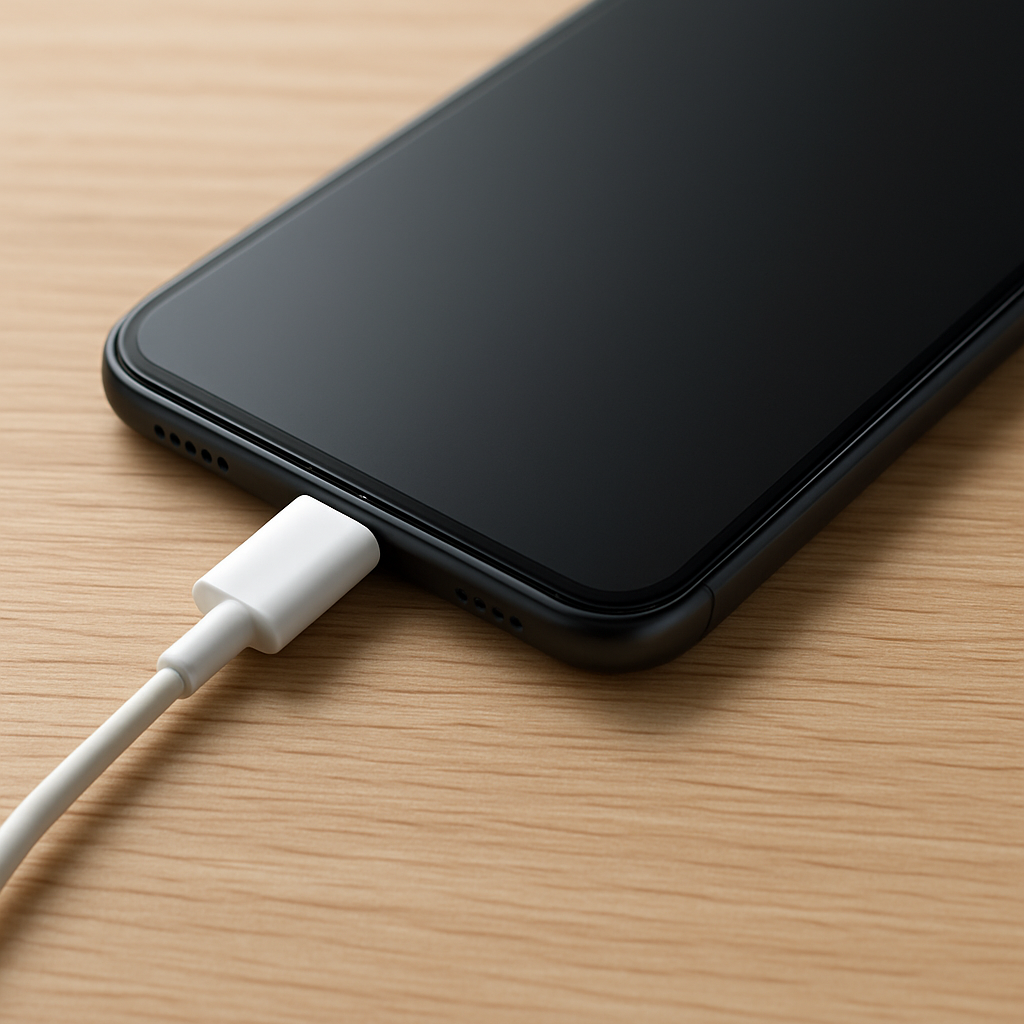
Charging Cable Causing Slow Charging — Resistance Loss or Cable Damage?
Quick Answer
The most common reason a charging cable causes slow charging is higher electrical resistance inside the cable. That resistance acts like a bottleneck, so your phone or tablet can’t pull as much current (amps), even if the charger brick is fine.
This usually means the cable’s internal wires, plug ends, or crimps have worn out, loosened, or corroded over time. For many people, slow charging shows up gradually after months of bending near the connector, but it can also happen suddenly after a hard tug or kink.
If you need a fast fix
- Try a different cable that is known to support fast charging (a short, thicker, certified cable if possible).
- Plug directly into a wall charger (not a laptop port, hub, car adapter, or power strip with weak ports).
- Clean the device port gently with a dry, soft tool (like a wooden toothpick) and remove visible lint; then reconnect firmly.
Quick Diagnosis Table
| Symptom | Most likely cause |
|---|---|
| Fast charging works with another cable, but not with yours | Your cable has higher resistance from wear, thin conductors, or internal damage |
| Cable or connector gets warm during charging | Resistance is wasting power as heat, limiting the current your device can use |
| Charging speed changes when you wiggle the cable near the plug | Broken strands or a loose connection inside the connector |
| “Charging” shows, but battery percentage barely moves | Voltage drop in the cable prevents proper fast-charge negotiation or reduces usable power |
| Works at low battery but slows dramatically above ~70–80% | Normal battery charging taper, made worse by cable voltage drop and heat |
Why This Happens
A charging cable isn’t just a “wire”; it has resistance, and that resistance increases when the cable is thin, long, damaged, or poorly made. When resistance goes up, the voltage reaching your device drops, so the device can’t safely draw as much current.
In real life, this looks like a phone that charges quickly with the cable that came in the box, but crawls with a cheap spare. It also shows up after lots of daily use where the cable is bent sharply near the connector, pinched in a car door, or wrapped tightly around a charger.
More resistance means more energy lost as heat in the cable, which leaves less power for charging and can make the device reduce charging speed to protect the battery.
Most Common Causes (Ranked)
- 1) Worn or broken wire strands near the connector: Repeated bending right where the cable meets the plug can break internal strands, increasing resistance and causing voltage drop under load.
- 2) Thin or low-quality cable conductors: Some cables use very thin power wires that cannot carry fast-charge current without significant resistance loss.
- 3) Dirty, oxidized, or loose connector contacts: Even if the cable looks fine, slight corrosion or a loose fit increases contact resistance and reduces delivered power.
- 4) Cable too long for the charging power: Longer cables have more resistance, so a 2–3 m cable can noticeably cut charging speed compared with a short one.
- 5) Not truly fast-charge capable (or wrong cable type): Some USB-C cables are charge-only at lower current, and some USB-A to USB-C cables limit the charging profile your device can use.
- 6) Heat buildup triggering charge throttling: A warm cable or connector can raise temperatures around the port, leading the phone to reduce charging current for safety.
If charging improves gradually after swapping to a better cable or cleaning the port, that usually indicates the issue was resistance or contact-related rather than a failing battery.
How to Check the Problem Safely
- Check 1: Compare with a known-good cable and the same charger. If charging speed jumps immediately, your original cable is the likely bottleneck.
- Check 2: Feel for abnormal warmth after 5–10 minutes of charging. A noticeably warm cable or connector can point to higher resistance.
- Check 3: Inspect both ends for damage. Look for kinks, flattened spots, fraying, bent plugs, or a loose “wiggly” connector shell.
- Check 4: Check the device port for lint. If the plug doesn’t click in firmly or sits slightly out, debris can reduce contact pressure and increase resistance.
- Check 5: If your phone shows charging details, note the message. “Fast charging” disappearing when you switch cables often means the cable can’t support the needed current or negotiation.
Safety note: if you smell burning, see melting plastic, or the connector is too hot to touch comfortably, unplug immediately and stop using that cable and charger.
How to Fix It
- Fix 1 (easiest): Replace the cable with a short, reputable fast-charge cable. Lower resistance improves voltage at the device, allowing higher safe current.
- Fix 2: Clean the device port and the cable tip carefully. Better contact reduces resistance at the connection point and can restore stable fast charging.
- Fix 3: Use the right cable for your charger and device type. For USB-C fast charging, use a USB-C to USB-C cable rated for the wattage you expect (for example, 60 W or 100 W) so it can carry more current with less loss.
- Fix 4: Reduce cable length and avoid adapters or extensions. Every extra connection can add resistance and cause voltage drop that knocks you out of fast-charging mode.
- Fix 5 (advanced/last resort): Test with a different wall charger that you know supports your device’s fast-charge standard. A mismatched charger can mask itself as a “bad cable,” so confirming both parts removes guesswork.
Signs of Battery or Hardware Damage
- Battery drains unusually fast even when you are not using the device.
- Phone gets hot during light use or becomes hot quickly while charging with multiple known-good cables.
- Charging repeatedly starts/stops (rapid connect/disconnect) even when the cable is not moved.
- The charging port feels loose, the plug won’t stay seated, or the device only charges at a certain angle.
- Battery percentage jumps, stalls for long periods, or shuts down unexpectedly at higher percentages.
- Swelling, screen lifting, or a bulging back panel.
- Moisture warnings, corrosion visible in the port, or repeated “accessory not supported” messages with good cables.
When Repair Is No Longer Worth It
If a new, quality cable and a known-good charger still won’t charge reliably, the issue may be the device port, charging IC, or battery. At that point, repeated cable swapping won’t fix the underlying fault, and continued use can worsen heat and wear.
As a rule of thumb, replace the cable immediately, consider port cleaning or a port repair next, and only then weigh battery replacement. If the repair estimate approaches a large portion of the device’s resale value (or if the battery is swollen), replacement is usually the smarter and safer option.
How to Prevent This Problem in the Future
- Choose cables with thicker power conductors and a reputable rating (especially for fast charging), since lower resistance holds voltage better under load.
- Prefer shorter cables when you want the fastest charging, and save long cables for convenience rather than speed.
- Avoid sharp bends near the connector; give the cable a gentle curve and don’t wrap it tightly around the charger.
- Unplug by gripping the plug, not yanking the cord, to prevent strand breakage and loosening inside the connector.
- Keep ports clean by occasionally removing pocket lint; a snug connection reduces contact resistance and heat.
- Don’t charge with the phone pressed into a pillow or blanket, since heat can trigger charging slowdowns and accelerate wear.
- Replace cables at the first signs of intermittent charging, warmth near the plug, or visible kinks, before resistance climbs further.
FAQ
Does a damaged cable really reduce charging speed, or does it just stop working?
It can do both. Many cables fail gradually: internal strands break or contacts wear, raising resistance, so charging becomes slower before it becomes intermittent or stops completely. Slow charging with occasional disconnects is a common “middle stage” of cable failure.
Why does my cable charge slowly only when I use fast charging?
Fast charging pushes more power, which makes voltage drop from cable resistance more noticeable. A cable that seems “fine” at low power can fall out of fast-charge mode when the device detects too much voltage drop or heat. Using a higher-rated, shorter cable often fixes this immediately.
Is it normal for charging to slow down above 80%?
Yes, most devices slow charging near the top to protect the battery, and this is normal behavior. A high-resistance cable can make that slowdown feel worse because less usable power reaches the device and temperatures rise more easily. If you also see warmth at the connector or big speed differences between cables, resistance is likely part of the issue.
For a full overview of this issue and step-by-step solutions, read the complete troubleshooting guide.
For a clearer understanding of battery drain and charging limits, Mark Reynolds focuses on simple, practical fixes that work across most devices. You can also read the complete troubleshooting guide.