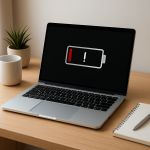
Battery Drains Faster Over Time — Normal Aging or Abnormal Wear?
Quick Answer
Most of the time, a battery that “doesn’t last like it used to” is normal lithium battery aging. Over months and years, the battery’s chemical capacity slowly shrinks, so 100% simply holds less energy than it did when new.
For many phones, laptops, tablets, earbuds, and power banks, a noticeable drop can start after 1–2 years of regular use, and becomes more obvious after a few hundred charge cycles. Faster-than-expected drain can also happen if heat, frequent 0–100% charging, or heavy loads accelerate wear.
If you need a fast fix
Lower screen brightness, turn on Battery Saver/Low Power Mode, and close battery-heavy apps to reduce current draw right away.
Let the device cool down (unplug and move it out of blankets, cars, or direct sun) because heat can make both drain and aging worse.
Restart the device and install pending updates, since runaway background processes can mimic “bad battery” symptoms.
Quick Diagnosis Table
Symptom
Most likely cause
Battery life slowly worsens month by month
Normal lithium cell degradation reducing usable capacity
Battery percentage drops faster below 30% or shuts off early
Aged battery with higher internal resistance causing voltage sag
Device gets warm during light use and drains quickly
Heat + background activity accelerating consumption and wear
Battery life suddenly worse after an update or new app
Software/setting change increasing power use (not always battery damage)
Charging to 100% is quick but it still lasts a short time
Reduced capacity: the “tank” is smaller even if charging seems normal
Why This Happens
Lithium batteries store energy through chemical reactions. With every charge and discharge, tiny irreversible changes build up inside the cell, reducing how much energy it can hold.
Think of it like a fuel tank that slowly shrinks. You can still fill it to “full,” but the total amount of fuel is less, so you reach empty sooner even if your driving habits are the same.
As the battery ages, it may also struggle to deliver high power without the voltage dipping. That can look like rapid percentage drops, sudden shutdowns, or big drain during tasks like gaming, video calls, or using the camera.
Most Common Causes (Ranked)
1) Natural capacity loss from charge cycles: Every full cycle (roughly 0–100% combined use) slightly reduces maximum capacity, so runtime slowly shortens over time.
2) Heat exposure speeding up battery aging: Regularly using or charging in hot conditions (car dashboards, beds/blankets, direct sun) accelerates chemical wear and reduces retention faster.
3) Frequent full charges and deep discharges: Living at 100% for long periods and often draining near 0% puts extra stress on lithium cells, which can worsen capacity loss.
4) Higher internal resistance as the battery ages: An older battery may still show 100%, but it can’t deliver peak power efficiently, causing faster drops under load and occasional early shutdowns.
5) Background activity masking as battery wear: New apps, sync loops, poor cellular signal, or a stuck process can increase power use and make aging feel worse than it is.
6) Charging gear and habits that add heat: Fast charging, low-quality chargers/cables, or charging while gaming can create extra heat, which compounds long-term degradation.
If battery life improves after changing settings, updating apps, or reducing heat, that usually points to higher power use (not permanent damage) rather than pure capacity loss.
How to Check the Problem Safely
Check 1: Look up battery health in system settings (if available) and note the reported maximum capacity or condition (for example, “Service,” “Fair,” or a percentage).
Check 2: Compare screen-on time now versus when it felt “normal,” using the built-in battery usage screen to see if the drop matches a specific app or is across the board.
Check 3: Feel for heat during normal use. If the device is warm when you are only browsing or idle, check the battery usage page for apps running in the background.
Check 4: Watch behavior at low charge (30% to 5%). Rapid drops, unexpected shutdowns, or big jumps after plugging in are common signs of an aged battery struggling under load.
Check 5: Try a controlled test: charge to 80–90%, use the device normally for an hour with the same tasks, and note the percentage drop to compare day to day.
Safety note: if you see swelling, smell a chemical odor, or the device is too hot to comfortably touch, stop using it and do not continue testing.
How to Fix It
Fix 1 (easiest): Reduce power demand (lower brightness, limit widgets/background refresh, turn off unused radios) because a smaller, older battery is most noticeable when the device draws more power.
Fix 2: Identify and remove “runaway” drainers by checking battery usage, updating or uninstalling suspicious apps, and disabling excessive notifications and always-on location.
Fix 3: Reduce heat and charging stress by avoiding charging under pillows/blankets, removing thick cases while charging, and not gaming or video-calling while fast charging.
Fix 4: Use battery-friendly charging targets (when your device supports it): enable optimized charging or cap daily charging to around 80–90% to slow future degradation.
Fix 5 (advanced/last resort): Replace the battery (or service the device) if health is low or low-charge shutdowns happen, because degraded lithium cells do not “recover” lost capacity.
Signs of Battery or Hardware Damage
Battery swelling (screen lifting, case bulging, trackpad raised on a laptop).
Device becomes very hot during light tasks or while idle.
Sudden shutdowns at 20–40% or large percentage jumps (for example, 35% to 10% in minutes).
Charging stops and starts repeatedly with known-good cables and chargers.
Hissing, popping, or a sweet/chemical smell near the device.
Significantly reduced runtime within a short period (days to a couple of weeks) with no app or setting changes.
Visible corrosion or liquid exposure indicators triggered (if your device has them), followed by abnormal drain.
When Repair Is No Longer Worth It
If your battery health is poor and the device also has other issues (cracked screen, failing storage, random reboots, damaged charging port), putting money into a battery may only delay a larger failure. In those cases, replacement can be the more reliable choice.
As a rule of thumb, if a battery replacement costs a large fraction of a newer, faster model you’d be happy to use for several years, upgrading often delivers better value. If the device still meets your needs and the battery is the main problem, a battery replacement is usually the most cost-effective fix.
How to Prevent This Problem in the Future
Avoid heat whenever possible: don’t leave devices in hot cars, and keep them ventilated while charging.
Use optimized charging features or set charging limits (around 80–90%) for daily use, saving 100% for travel days.
Try not to regularly drain to 0%. Plug in around 20–30% when convenient to reduce deep-discharge stress.
Use quality chargers and cables, and avoid unreliable fast chargers that run excessively hot.
Don’t stack heavy usage on top of charging (gaming, hotspot, 4K recording) if the device already warms up.
Store devices partially charged (around 40–60%) if you won’t use them for weeks, and keep them in a cool, dry place.
Check battery usage monthly so you catch a new app or setting that increases drain before it feels like “battery failure.”
FAQ
Is it normal for a lithium battery to get worse even if I take care of it?
Yes. Lithium batteries wear out as part of normal chemistry, even with ideal charging habits. Good habits mainly slow the decline, so the battery stays usable longer and avoids early overheating or low-charge shutdowns.
Why does my battery drop faster from 100% to 80% (or from 30% to 10%)?
The percentage is an estimate based on voltage and usage patterns, and that estimate gets harder as the battery ages. Many devices also use the top part of the charge more aggressively for performance, while an aged battery may sag more at low charge, making the last 30% feel much shorter.
Will recalibrating the battery restore the original runtime?
Recalibration can improve how accurately the percentage is displayed, especially if it has become jumpy or inconsistent. It does not restore lost chemical capacity, so it won’t bring back the battery life you had when the device was new. If runtime is consistently short, replacement is the real fix.