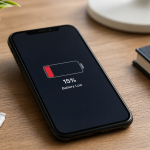
You turn off Location Services because it seems like the obvious fix. Then you put your phone down for the night, expecting to wake up to almost the same battery percentage. Instead, it is down another 10 or 15 percent, maybe more. That is the moment when a small annoyance turns into something heavier.
I have had that exact feeling. You make one smart change, the battery still drops, and suddenly the phone feels less dependable than it did the day before. It is not completely broken. But it is not right either.
And once you notice it, it is hard to ignore.
Why This Situation Feels So Frustrating
The frustrating part is not just the battery drain itself. It is the fact that you already tried what seemed like the easy answer. Turning off location sounds like the kind of thing that should help right away. So when nothing changes, it can make you feel weirdly stuck, like the phone is doing something behind your back and you have no real way to stop it.
That is where the uneasiness comes in. Your phone is not some optional gadget anymore. It gets you through work, school, travel, messages, maps, rides, payments, and everything else packed into a normal day. If the battery starts slipping even while the phone is resting, trust goes with it.
Something feels off.
And it is stressful in a very ordinary way. Not dramatic. Just constant. You stop leaving the house without a charger. You start checking the battery more than you want to. You begin the day already wondering whether the phone will make it to dinner.
What People Usually Notice First
For a lot of people, the first sign is overnight drain. You charge the phone before bed, leave it untouched, and by morning the battery has dropped more than expected. That can be especially annoying because the phone was supposedly doing nothing. No calls, no scrolling, no videos. Just sitting there.
Other times it shows up in the middle of a normal day. You are at work or in class, barely using the phone, and the percentage keeps falling faster than it should. You look down after an hour and it has lost another chunk of power for no obvious reason.
Some people also notice heat. The phone feels warm while it is in a pocket, on a desk, or face down on a table. That is often what makes the problem feel more serious, because warmth suggests activity. But if location is off, then what is still running?
That question gets louder when you are traveling or spending the day out. A battery issue is easier to shrug off when an outlet is nearby. It feels very different when you are commuting, flying, running errands, or waiting to be picked up and the battery already looks shaky by early afternoon.
Why It Can Be Confusing
The confusion comes from a simple assumption: if location was causing the drain, turning it off should stop the drain. That makes sense. But battery use is rarely tied to one setting alone. A phone can still lose power because of background app activity, network searching, display behavior, account syncing, aging battery health, or software that is just not behaving well that day.
That is why this problem gets under people’s skin. You make one reasonable change and expect one clear result. Instead, the battery keeps dropping, and now you do not know if location was never the problem, if another app is quietly active, or if the device itself is starting to wear down.
If you want a broader look at why this can still happen, it helps to remember that battery drain is often a pileup of small things rather than one obvious culprit.
That does not make it less irritating. It just explains why the answer is not always neat.
The Hidden Impact on Daily Use
Battery issues have a way of affecting more than battery. They change how you use the device. You hesitate before opening apps. You lower brightness even when you do not want to. You keep power-saving mode on longer than you should. You carry cables, power banks, and that low-level worry that the phone may not hold up when you need it most.
There is also the mental side of it. A draining battery creates this background stress that follows you around all day. It is one more thing to monitor. One more thing that can go wrong. And because modern devices do so much for us, any hint of unreliability feels larger than it should.
That is really what makes this issue stick. It is not just about percentages. It is about losing trust in something that is supposed to quietly work. Hidden activity is unsettling because you cannot see it. You just see the result, and the result is a battery that keeps shrinking.
You want control. You get uncertainty.
When It’s Probably Nothing Serious
Sometimes the drain is annoying but normal. A recent software update can make a phone work harder for a day or two in the background. Poor cell signal can also drain a battery quickly, even if location is off, because the device keeps trying to stay connected. The same goes for old apps that need updating or a period of heavier notifications and syncing than usual.
If the battery drop is mild, the phone is otherwise working fine, and the problem comes and goes rather than getting steadily worse, it may not be a sign of anything major. Some days a phone just burns more power than expected. That is not satisfying, but it is true.
It may settle down on its own.
When You Should Pay More Attention
There are times when it is worth taking more seriously. If the battery is draining fast every day with very light use, if the phone gets warm while idle on a regular basis, or if battery life has suddenly dropped compared with the week before, that points to something more than random fluctuation.
You should also pay closer attention if charging has become inconsistent, the phone is lagging while draining, or the battery percentage seems jumpy and unreliable. Those signs do not automatically mean the device is failing, but they do suggest that the issue is more than a harmless off day.
If the phone is older, battery wear may simply be catching up with it. That is normal too, even if it is frustrating.
Simple Ways to Improve the Situation
The most helpful approach is usually the least dramatic one. Look at overall battery usage rather than focusing only on location. A single app refreshing too often, a weak signal area, a bright screen, or an overdue update can all matter more than one setting being on or off.
It also helps to pay attention to patterns instead of isolated moments. If the drain is mostly overnight, the cause may be different from a phone that loses power during active daytime use. If the device gets warm, that is a clue worth noticing. If the problem started right after installing something new, that matters too.
Small adjustments can add up. Closing the gap between expected battery life and real battery life often comes from reducing background strain, keeping software current, and being realistic about battery health on an older device.
Nothing fancy. Just honest observation.
Conclusion
When your battery keeps draining even after turning off location, the hardest part is not just the lost power. It is the feeling that you did what should have worked, and the phone ignored you. That is what makes people uneasy. It chips away at confidence.
Most of the time, it is not a disaster. But it is still disruptive, especially when you depend on your phone to make it through the day without surprises. If the drain is mild, it may be temporary. If it is persistent, warm, or getting worse, it deserves a closer look.
Either way, you are not imagining it. When a phone loses power during rest, during class, at work, or while you are out all day, it changes how you use it. And that is reason enough to pay attention.
Because a phone does not need to be dead to feel unreliable.