Phone Battery Suddenly Draining Very Fast — What Changed and How To Fix It
Quick Answer
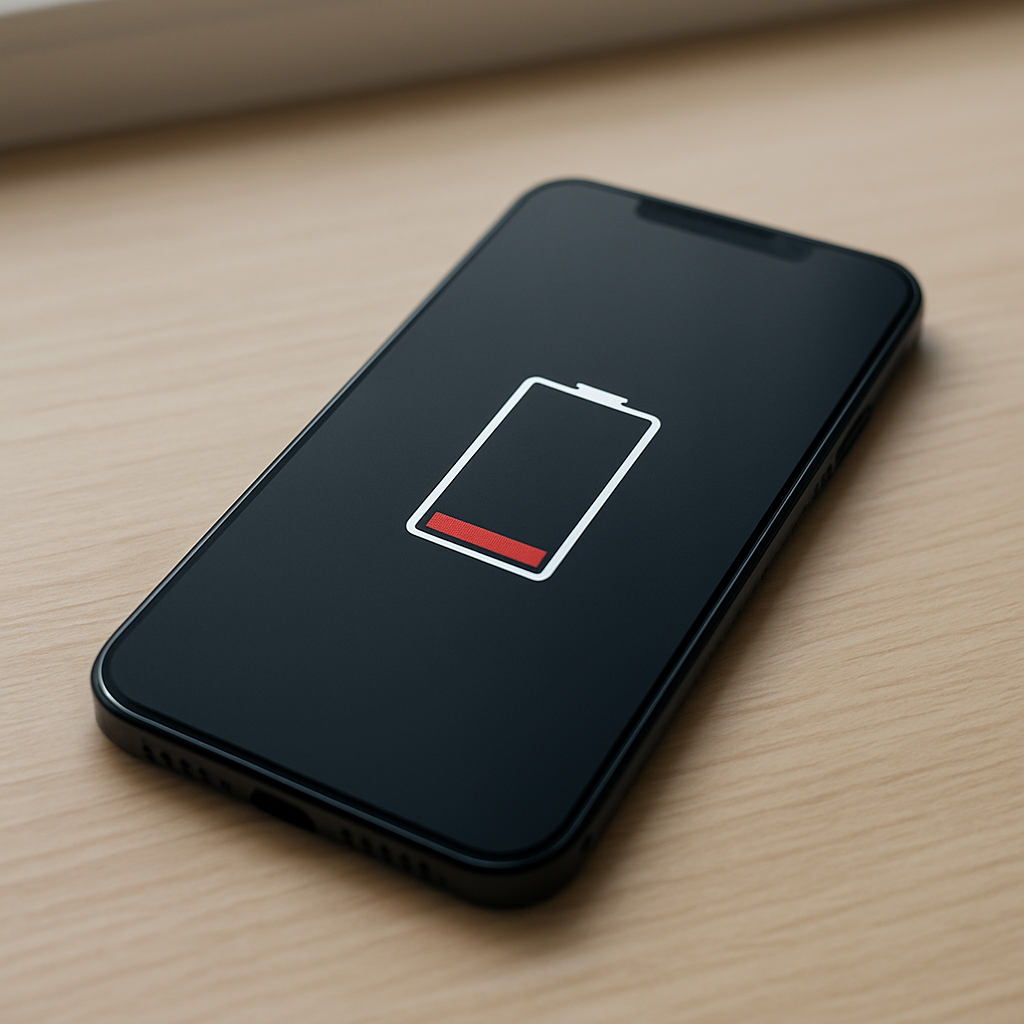
When a phone battery suddenly starts draining fast, the usual reason is a sudden jump in system load (an app, update, or background task using extra power) or a change inside the battery itself (higher internal resistance as it ages), which makes the same tasks “cost” more battery.
This often shows up right after an OS update, a new app install, a password change/account re-sync, or a big change in signal conditions. If it’s software-related, it commonly settles within 24–72 hours; if it’s battery wear, the fast drain tends to persist and gets worse over weeks.
If you need a fast fix
Restart the phone, then leave it plugged in on Wi‑Fi for 30–60 minutes so it can finish background tasks (syncing, indexing, photo processing) without draining on battery.
Turn on Battery Saver/Low Power Mode and lower screen brightness; the display and background activity are the fastest safe ways to reduce load immediately.
Check the battery usage screen and force-close or uninstall the top unexpected drain (an app you didn’t use much but shows high activity).
Quick Diagnosis Table
Symptom
Most likely cause
Battery drops fast even when the phone is idle
Background sync, backup, or a stuck app/service keeping the CPU awake
Phone gets warm during “nothing” or while in pocket
High system load from an app loop, poor signal causing radio power spikes, or post-update indexing
Battery percentage falls in chunks (e.g., 20% in minutes)
Battery aging/internal resistance causing voltage sag and inaccurate percentage reporting
Drain is much worse on cellular than on Wi‑Fi
Weak signal or frequent network switching increasing modem power use
Why This Happens
Your phone’s battery doesn’t just “run out.” It’s drained by the work your phone is doing: keeping the screen lit, running the processor, staying connected to networks, and syncing data in the background.
If something changes and increases workload, the battery can start dropping much faster even though you didn’t change your habits. Common examples include an OS update triggering photo indexing, a mail account re-checking thousands of messages, or a social app repeatedly trying to upload in the background.
If the battery itself has aged, it can develop more internal resistance, which makes it less efficient under load. That can cause faster drain and sudden percentage drops because the phone sees voltage dips and assumes the battery is emptier than it was a moment ago.
Most Common Causes (Ranked)
1) Post-update background work: After an OS or app update, the phone may rebuild indexes, re-optimize apps, rescan photos, or re-sync data, which spikes CPU and network use.
2) A misbehaving app (wake locks/background loops): One app can repeatedly refresh, scan location, or retry uploads, creating constant load even when the screen is off.
3) Battery aging and higher internal resistance: As batteries wear, they deliver power less efficiently, so normal tasks drain faster and the percentage may drop suddenly.
4) Poor signal or network switching: In weak coverage, the modem boosts power and retries transmissions; frequent 5G/LTE/Wi‑Fi switching can also increase drain.
5) New settings that increase load: Higher refresh rate, always-on display, extra notifications, continuous location, or new widgets can add steady background activity.
6) Extreme temperatures: Cold temporarily reduces usable capacity, while heat increases self-drain and can accelerate aging, making the problem show up “all at once.”
If the drain slowly improves over the next day or two, that usually indicates the phone was finishing background tasks rather than the battery suddenly failing.
How to Check the Problem Safely
Check 1: Open your battery usage page and look for an app with unusually high “background” usage; note anything you barely used but is near the top.
Check 2: Feel for heat: if the phone is warm while idle (especially near the camera or center back), something is likely running continuously.
Check 3: Compare Wi‑Fi vs cellular: use the phone on Wi‑Fi for an hour, then on cellular for an hour; a big difference points to signal/modem drain.
Check 4: Check battery health (if your phone provides it) and whether peak performance is limited; a low health reading supports internal resistance/aging as the cause.
Check 5: Watch for percentage “jumps” during normal use; large drops under modest load often indicate an aging battery or calibration issues after updates.
Safety note: if you notice swelling, a strong chemical smell, or the phone becomes hot to the touch, stop charging and stop using it until it’s inspected.
How to Fix It
Fix 1 (easiest): Restart the phone and update all apps; this clears stuck background processes and patches apps that may be looping.
Fix 2: Identify and control the top drainer: uninstall it, disable background refresh, remove its widgets, or restrict background data; this directly reduces constant system load.
Fix 3: Reduce radio and display load for 24–48 hours: use Wi‑Fi when possible, set the network mode to LTE/4G if 5G is unstable, lower brightness, and reduce refresh rate; these changes target the biggest power users.
Fix 4: Reset the “busy” services: sign out/in of problem accounts (mail/cloud), pause and re-enable backup, and re-check location permissions; this can stop repeated sync retries.
Fix 5 (advanced/last resort): Back up your data and perform a full reset (or clean reinstall), then test before restoring every app; this isolates OS/app corruption that can keep the system under constant load.
Signs of Battery or Hardware Damage
Battery percentage drops in large chunks even with light use (messaging, browsing) and repeats daily.
The phone shuts off with 10–30% battery remaining, especially under camera use, gaming, or navigation.
The back of the phone bulges, the screen lifts, or the case no longer fits properly (possible battery swelling).
The phone gets unusually hot during charging or while idle, not just during heavy apps.
Charging is erratic: it pauses, fluctuates, or takes much longer than it used to with the same charger.
Battery health reads very low, or the phone warns about reduced peak performance.
Drain remains severe after a clean reset with only default apps installed.
When Repair Is No Longer Worth It
If the phone is otherwise reliable and you like it, a battery replacement is usually worthwhile, especially when the problem matches aging/internal resistance symptoms. It’s less worthwhile if the device also has charging port issues, random reboots, overheating, or poor performance that suggests broader hardware wear.
As a rule of thumb, consider replacement if repair costs approach a significant portion of the phone’s resale or replacement value, or if you’re facing multiple repairs at once. Also weigh security update support: if the phone no longer gets updates, putting money into it may not be the best long-term choice.
How to Prevent This Problem in the Future
After major OS updates, keep the phone plugged in on Wi‑Fi for a while; it lets indexing and syncing finish without draining your daily battery.
Audit battery usage monthly and remove apps that constantly sit near the top; background load is a common “silent” drain.
Limit always-on features you don’t truly use (always-on display, constant location access, aggressive widgets, high refresh rate).
Avoid extreme heat: don’t leave the phone in a hot car and remove thick cases while fast charging if it runs warm.
Use stable connectivity when possible: weak cellular signal increases power draw, so prefer Wi‑Fi calling or a more reliable network mode in low-coverage areas.
Charge in a battery-friendly range when you can (not always required, but helpful): frequent long periods at 100% in heat can accelerate aging.
Replace the battery when health is low rather than forcing the phone to run on a worn pack; higher internal resistance makes every task cost more power.
FAQ
Why did my battery start draining right after an update?
Updates often trigger background work like rebuilding search indexes, optimizing apps, re-scanning photos, and syncing accounts. That extra system load can cause noticeable drain for 24–72 hours, especially if you’re on cellular. If drain remains extreme beyond a few days, a specific app or a battery health issue is more likely.
Can a bad signal really drain a battery that fast?
Yes. In weak coverage, your phone’s modem works harder, boosts transmit power, and retries connections, which can heat the device and drain the battery quickly. If battery life is much better on Wi‑Fi than cellular, signal-related load is a strong clue.
How do I know if it’s the battery itself or just an app?
App-related drain usually shows up as one app (or “system services” right after an update) dominating battery usage and the phone running warm while idle. Battery aging tends to cause sudden percentage drops, shutdowns above 0%, and consistently worse life across all apps, and it won’t improve much after restarts or app changes. Checking battery health and testing after a clean reset can help confirm it.