Laptop Battery Draining Even When Plugged In — Power Adapter or Battery Fault?
Quick Answer
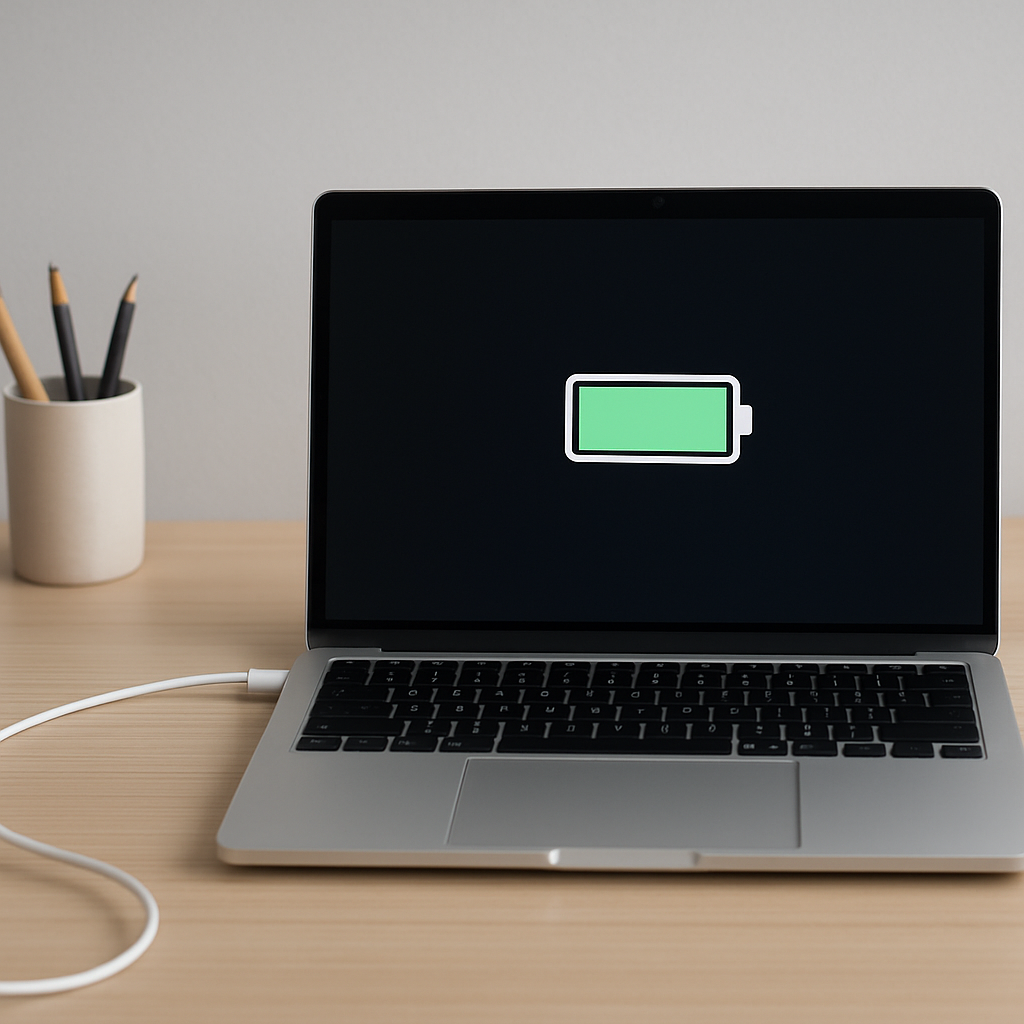
If your laptop battery drains even while it’s plugged in, the most common reason is that the charger is not providing enough usable power for what the laptop is doing, or the battery can’t accept charge efficiently anymore. In that situation, the laptop quietly pulls the “missing” power from the battery to keep running.
This can happen immediately under heavy load (gaming, video calls, rendering) or gradually over weeks as an adapter, cable, or battery ages. If it only happens during demanding tasks, the adapter wattage or connection is usually the first thing to suspect.
If you need a fast fix
Switch to the original manufacturer charger (or one with the same voltage and equal or higher wattage) and plug it directly into a wall outlet.
Lower power use for now: close heavy apps, reduce screen brightness, and set the power mode to “Best power efficiency” or “Balanced.”
Power down, unplug, wait 30 seconds, then reconnect the charger firmly and reboot to reset charging detection.
Quick Diagnosis Table
Symptom
Most likely cause
Battery percentage drops during gaming or video calls but rises when idle
Adapter wattage is too low, or USB-C charger/cable can’t deliver full power
Battery keeps draining even at idle while plugged in
Adapter is failing, DC jack/USB-C port has a poor connection, or battery is severely worn
Charging light blinks, or “Plugged in, not charging” appears
Loose DC-in jack, worn USB-C port, or damaged charger cable
Battery charges very slowly and laptop feels warm
Adapter is underpowered, system is pulling high load, or battery health is poor
Why This Happens
Your laptop needs a certain amount of power to run the CPU, screen, storage, and to charge the battery. If the adapter can’t supply enough wattage, the laptop “tops up” the difference by using the battery, even though it’s plugged in.
This is common when using a smaller adapter than the laptop expects, a third-party USB-C charger that only negotiates a lower power profile, or a cable that limits current. It can also happen when a battery gets old and its internal resistance rises, so charging becomes inefficient or stops under load to prevent overheating.
The result is simple: power demand stays higher than incoming power, so the battery percentage falls while plugged in.
Most Common Causes (Ranked)
1) Underpowered or incorrect charger: If the adapter wattage is lower than the laptop’s requirement, the laptop may run but still drain the battery during normal use or any heavy task.
2) USB-C charging limits (charger, cable, or port): Many USB-C setups default to lower wattage if the charger/cable isn’t rated for it, or if the laptop only accepts certain USB-C Power Delivery profiles.
3) Failing adapter or damaged cable: A worn cable, frayed insulation, or a weakening power brick can drop voltage under load, making the laptop dip into the battery.
4) Battery aging or reduced charge acceptance: An older battery may show “charging,” but it can’t take in energy efficiently, so the percentage barely increases or falls during use.
5) Loose DC jack or worn charging port: If the connection is intermittent, the laptop keeps switching between adapter power and battery power, often without an obvious warning.
6) High system power draw from performance mode or background load: Turbo/performance settings, hot CPU operation, or heavy background tasks can push demand above what a marginal charger can deliver.
If things improve after switching to a correct higher-wattage charger or reducing load, that gradual improvement usually points to an adapter/cable limitation rather than a sudden motherboard failure.
How to Check the Problem Safely
Check 1: Confirm the charger specs. Look at the label on the adapter and compare it to what your laptop requires (voltage must match; wattage should meet or exceed the original).
Check 2: Try a known-good compatible charger. If the draining stops with an OEM or higher-wattage unit, your original adapter/cable is likely the issue.
Check 3: Inspect and reseat connections. Unplug and replug both ends, check for debris in the port, and try a different wall outlet (avoid power strips for testing).
Check 4: Test behavior under load vs idle. Note the battery percentage while idle for 10 minutes, then while doing a heavier task for 10 minutes; draining only under load strongly suggests insufficient adapter output.
Check 5: Check battery health reporting. Use your OS battery report or the laptop vendor utility to review battery health, full charge capacity, and cycle count; very low capacity or “service recommended” points to a battery that can’t charge well.
Safety note: if you notice swelling, burning smell, excessive heat, or sparking at the port, stop using the device and charger immediately.
How to Fix It
Fix 1 (easiest): Use the correct OEM charger or a proven equivalent with the same voltage and equal or higher wattage. This removes the most common “power deficit” that causes battery drain while plugged in.
Fix 2: Replace the USB-C cable (if applicable) with an e-marked cable rated for your charger wattage (often 60W, 100W, or 240W). A low-rated cable can silently cap power and force the laptop to use the battery.
Fix 3: Reduce peak power draw while charging by switching to Balanced mode, limiting maximum processor state, and lowering screen brightness. This helps the adapter “catch up” if it’s borderline and can stabilize charge level.
Fix 4: Address battery health issues: run a full charge/discharge calibration once if your manufacturer recommends it, then consider battery replacement if capacity is severely reduced. A healthy battery should accept charge steadily when the adapter is sufficient.
Fix 5 (advanced/last resort): Update BIOS/UEFI and charging-related firmware or vendor power management software. Some laptops have charging bugs or USB-C PD negotiation issues that firmware updates can improve.
Signs of Battery or Hardware Damage
Battery bulging, lifted trackpad, or the bottom case no longer sits flat
Strong sweet/chemical smell, smoke, or sizzling sounds
Laptop or charger becomes unusually hot during light use
Charging cuts in and out when the cable is touched or moved
Battery percentage drops in large jumps (for example, 40% to 20% quickly)
Laptop shuts off suddenly even when the battery shows charge remaining
Charger brick makes buzzing/clicking sounds or shows discoloration/melting
When Repair Is No Longer Worth It
If the laptop needs both a new battery and a DC jack/USB-C port repair, the total cost can approach the value of an older machine. For laptops with a soldered charging port or complex disassembly, labor may be the biggest expense.
As a rule, replace the charger first (lowest cost, highest success rate), then the battery if health is poor. If the problem persists with a known-good charger and a good battery, get an estimate for port or motherboard power circuitry repair and compare it to the cost of a replacement laptop with a new warranty.
How to Prevent This Problem in the Future
Use a charger that matches the laptop’s required wattage, especially if you run demanding apps while plugged in.
If charging via USB-C, use a quality PD charger and an e-marked cable rated for the required wattage.
Avoid bending the cable sharply near the connector and don’t carry the laptop by the charging cord.
Keep the charging port clean and free of lint; plug in straight to reduce wear on the jack.
Manage heat: keep vents clear and avoid charging on soft surfaces that trap heat, since heat accelerates battery aging.
For daily desk use, consider a vendor “battery health” or charge limit feature (like 80%) to reduce long-term battery wear.
Replace a fraying cable or overheating adapter early; unstable power delivery often gets worse over time.
FAQ
Why does my laptop say “plugged in” but the battery still goes down?
“Plugged in” only means the laptop detects a charger connection, not that enough power is being delivered. If the adapter wattage is too low, the cable is limiting power, or the adapter is weakening under load, the laptop will use the battery to cover the shortfall. A worn battery can also accept charge poorly, which makes the percentage drop during use.
Can I keep using the laptop if it drains while plugged in?
You can for short periods, but it’s a warning that the power system is not operating normally. Continued use with an underpowered or failing adapter can lead to frequent deep battery cycling, which speeds up battery wear. If you notice heat, flickering charging, or burning smells, stop and troubleshoot immediately.
Will buying a higher-wattage charger fix it?
Often, yes, as long as the voltage is correct and the charger is compatible with your laptop. A higher-wattage adapter gives the laptop enough headroom to run the system and charge the battery at the same time. For USB-C laptops, make sure the charger and cable support the needed USB-C Power Delivery wattage profile.