Charger Getting Warm: Normal Heat vs Dangerous Overheating Explained
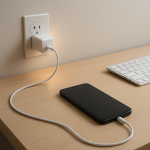
A charger becoming warm during use is usually normal, but excessive heat can indicate electrical overload, poor ventilation, or internal failure. Understanding the difference helps prevent device damage and safety risks.
Quick Diagnostic Checklist
- Check if the charger is only warm or too hot to hold
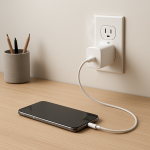
- Ensure the charger is on a hard, ventilated surface
- Verify charger wattage matches the device
- Inspect cable and connector condition
- Check room temperature and airflow
- Test charging with device idle
Why chargers naturally produce heat
All chargers generate heat during normal operation. A charger converts alternating current (AC) from a wall outlet into direct current (DC) suitable for electronic devices. This energy conversion process is not perfectly efficient, and some electrical energy is always lost as heat.
Heat production increases when:
- Power output is higher
- Charging speed is faster
- Electrical resistance increases
- Cooling is restricted
Mild warmth is therefore expected and typically indicates normal power transfer.
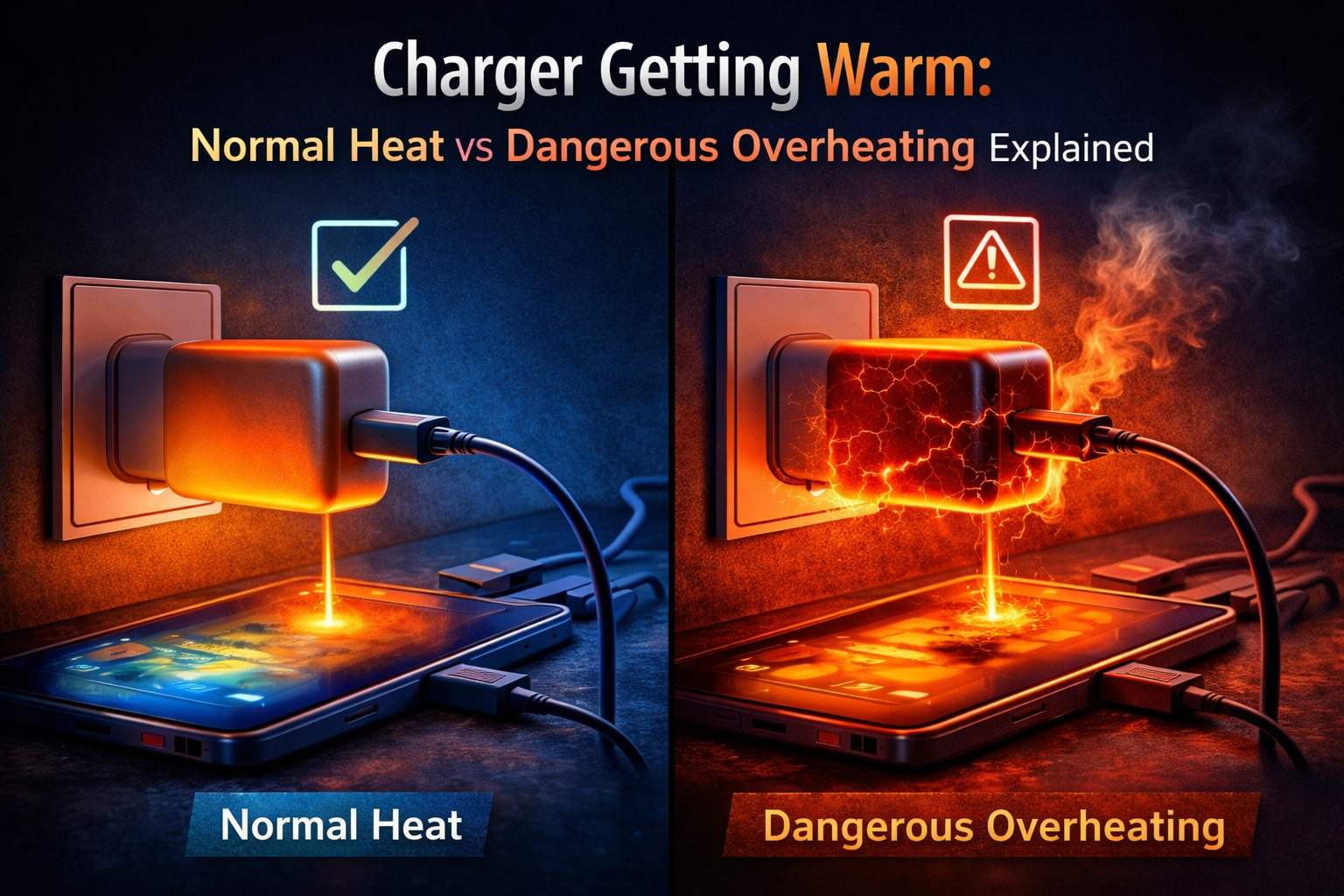
Normal temperature vs overheating
- Slightly warm surface → normal
- Warm but comfortable to hold → typical under load
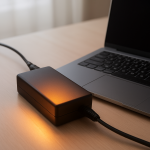
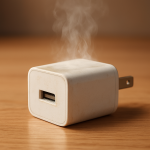
- Very hot to touch → abnormal
- Burning smell or deformation → dangerous
Most consumer chargers are designed to operate safely within internal temperature limits controlled by thermal protection systems.
Main factors that increase charger temperature
High power output or fast charging
More electrical current flowing through internal components produces more heat.
Poor ventilation
Soft surfaces, enclosed spaces, or stacked electronics trap heat.
Heavy device usage while charging
Gaming, video streaming, or large data processing increases energy demand.
High ambient temperature
Warm environments reduce heat dissipation efficiency.
Electrical resistance in cable or connector
Loose or worn connections generate additional heat.
Aging internal components
Older chargers may become less energy efficient over time.
Professional thermal safety assessment
Normal operating heat characteristics
- Temperature rises gradually during charging
- Heat stabilizes after reaching steady load
- No odor or structural change
Abnormal overheating indicators
- Surface too hot to touch comfortably
- Heat increases rapidly
- Charging interruptions occur
- Electrical buzzing or smell
- Plastic softening or discoloration
High-risk overheating causes
Internal component failure
Faulty capacitors, transformers, or voltage regulators can overheat.
Power overload
Using a charger beyond its rated output increases thermal stress.
Counterfeit or low-quality chargers
Poor internal design can lack adequate thermal protection.
Damaged insulation or wiring
Electrical leakage generates excessive heat.
Safety warning
If a charger becomes too hot to touch, emits a burning smell, or shows physical deformation, disconnect it immediately. Continued use can create electrical or fire hazards.
How to reduce charger heat safely
- Use manufacturer-approved chargers
- Ensure airflow around charger body
- Charge on hard surfaces only
- Avoid covering charger during use
- Limit heavy device activity while charging
- Unplug charger when not in use
When replacement is recommended
Replace the charger if overheating persists despite proper ventilation and normal usage conditions. Persistent high heat indicates reduced efficiency or internal damage.
FAQ
Is it normal for a charger to get warm?
Yes. Heat is a natural byproduct of energy conversion.
Can a warm charger damage my device?
Normal warmth does not cause damage. Excessive heat can.
Why do fast chargers get hotter?
Higher power transfer increases internal electrical load.
Should I unplug a charger after charging?
Yes. This reduces continuous heat generation.
Author Expertise
This guide is based on thermal behavior of electronic power supplies, electrical resistance principles, and consumer charger safety standards.
Related Guides
- Charger Overheating While Idle
- Laptop Charger Overheating Battery
- Laptop Charger Overheating While Off
- Charger Overheating Symptoms Dangerous
Conclusion
Most chargers become warm during normal operation due to electrical energy conversion. However, excessive heat, odor, or structural damage indicates abnormal thermal behavior. Monitoring temperature, ensuring ventilation, and using certified chargers help maintain safe and efficient operation.
For a full overview of this issue and step-by-step solutions, read the complete troubleshooting guide.